
Uneven Shoulders in Children: When to Screen for Scoliosis
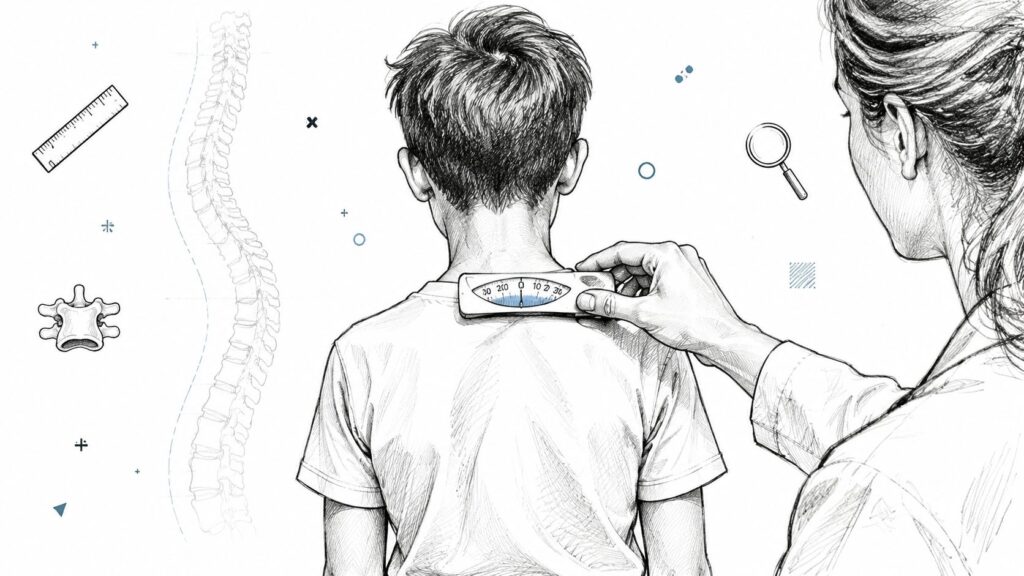
A parent usually spots it in an ordinary moment, a school photo, a backpack strap slipping, or while helping with a jumper. One shoulder looks higher than the other, and the question lands fast: is this just growing, or does my child need scoliosis screening? For families in places where school checks are no longer […]
Computer Vision Scoliosis: How AI Spots Spinal Asymmetry
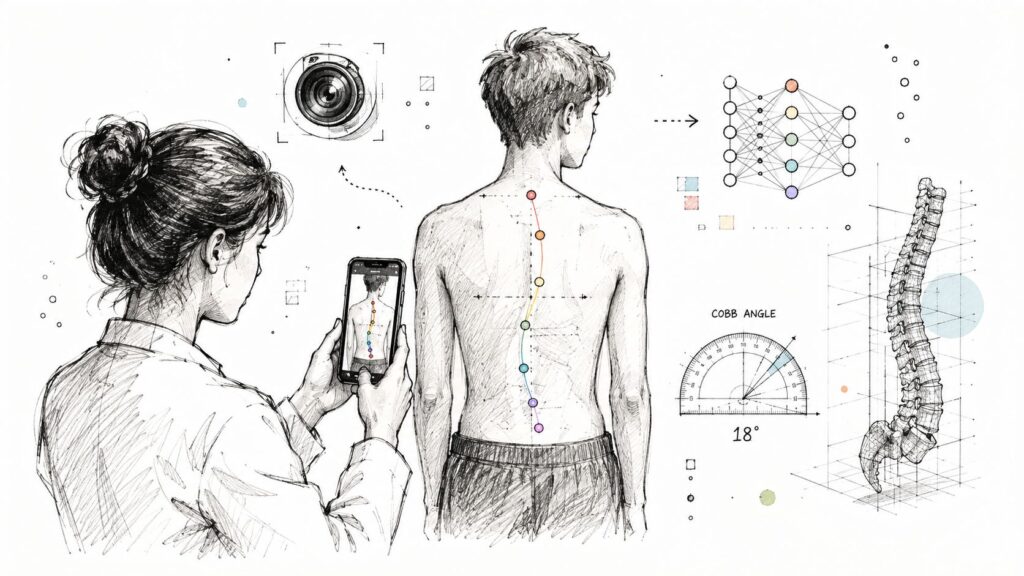
A parent stands in a hallway, asking a teenager to face away from the phone. The room is ordinary, the lighting imperfect, and the concern familiar: one shoulder seems higher, one hip looks different, or the back appears slightly uneven. A camera-based tool may identify that spinal asymmetry deserves attention, but it shouldn't turn a […]
Mild Scoliosis Detection: The Challenges of Early Diagnosis
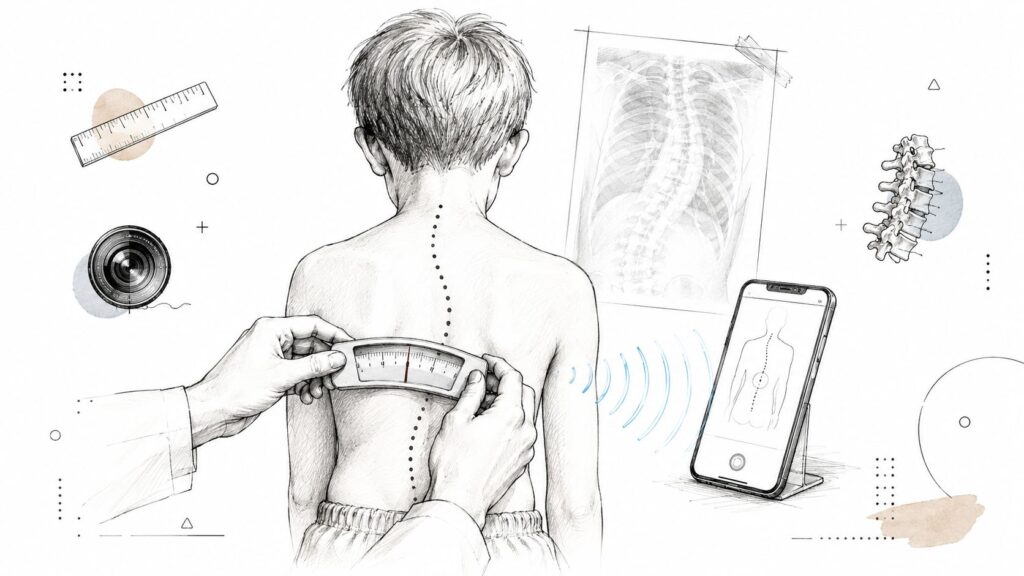
Your child's shoulders don't look quite level in a photo. The school nurse mentions a possible curve. You're left wondering whether it's posture, a growth spurt, or something that needs a closer look. That uncertainty is exactly where mild scoliosis detection becomes tricky, because early changes can be subtle long before they become obvious. For […]
Scoliosis Diagnosis Process: A Step-by-Step Guide
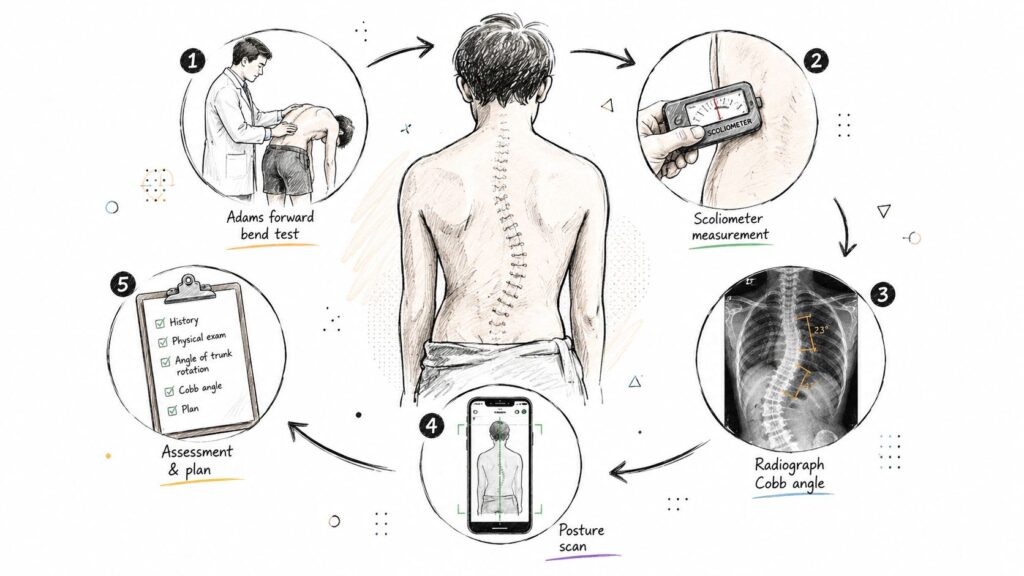
A parent often notices it first in the middle of an ordinary day. A shoulder looks a little higher, one shoulder blade seems more prominent, or a waistband sits oddly on the hips, and suddenly every school photo feels like a clue. That moment can be unsettling, but the scoliosis diagnosis process is usually a […]
Scoliosis Physiotherapy: Can Exercise Slow Progression?
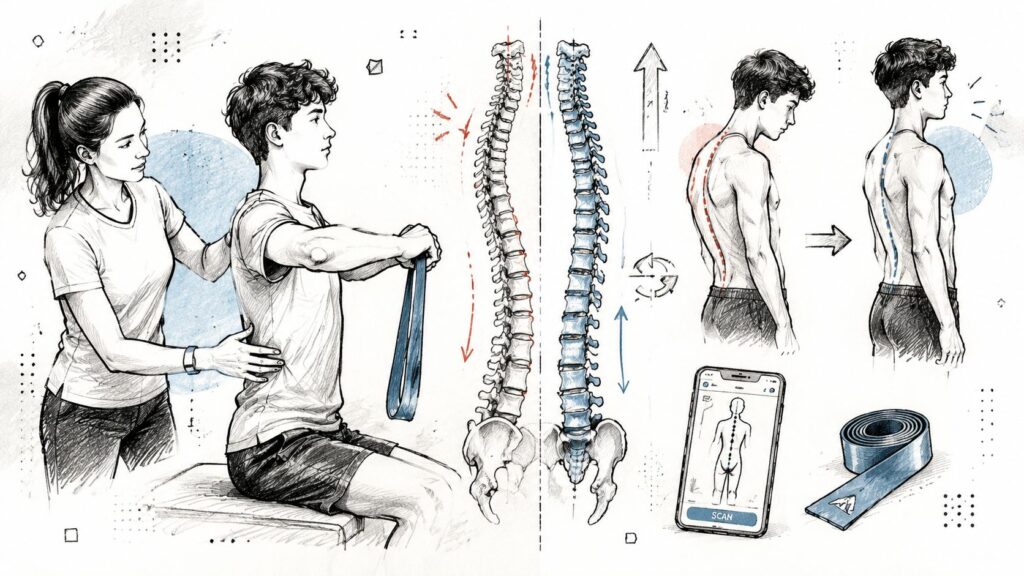
Can exercise slow scoliosis progression, or does it only make people feel better while the curve keeps changing? That's the question many families ask after a school screening, an X-ray, or a first clinic visit. The honest answer is more nuanced than a simple yes or no, and that's where scoliosis physiotherapy becomes useful, because […]
Posture Assessment: Key Metrics & AI Tools for You
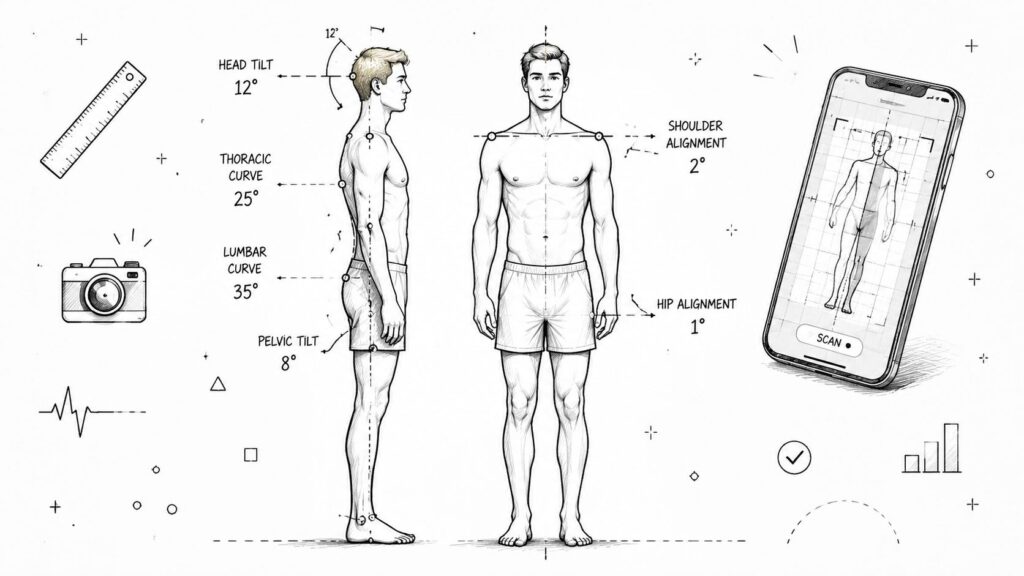
You notice it in small moments first. A shop window shows one shoulder sitting higher than the other, a colleague comments that you seem to be leaning into your laptop, or your child starts copying your seated slouch at the dinner table. People tend to brush those signs off until discomfort shows up, yet posture […]
Why Providers Choose AI Scoliosis Screening Software
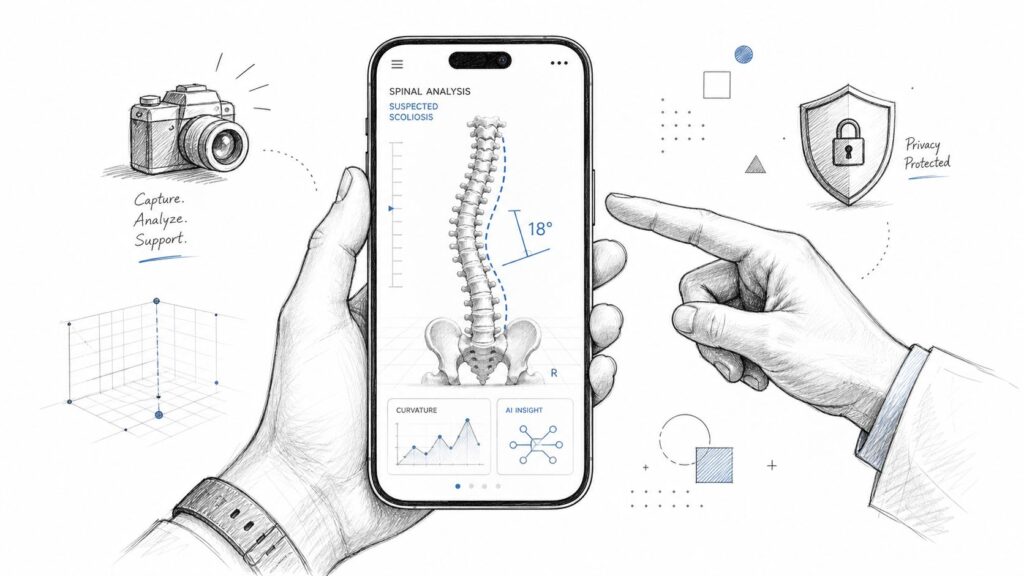
You're looking at a waiting room that keeps filling with mild-to-moderate scoliosis follow-ups, while the next specialist slot is already stretched thin. A physiotherapist wants a quick screening answer, an orthopaedic team wants cleaner triage, and parents want something that doesn't mean another X-ray unless it's really needed. That's where AI scoliosis screening software has […]
Cobb Angle Scoliosis: How to Measure, Understand & Manage It
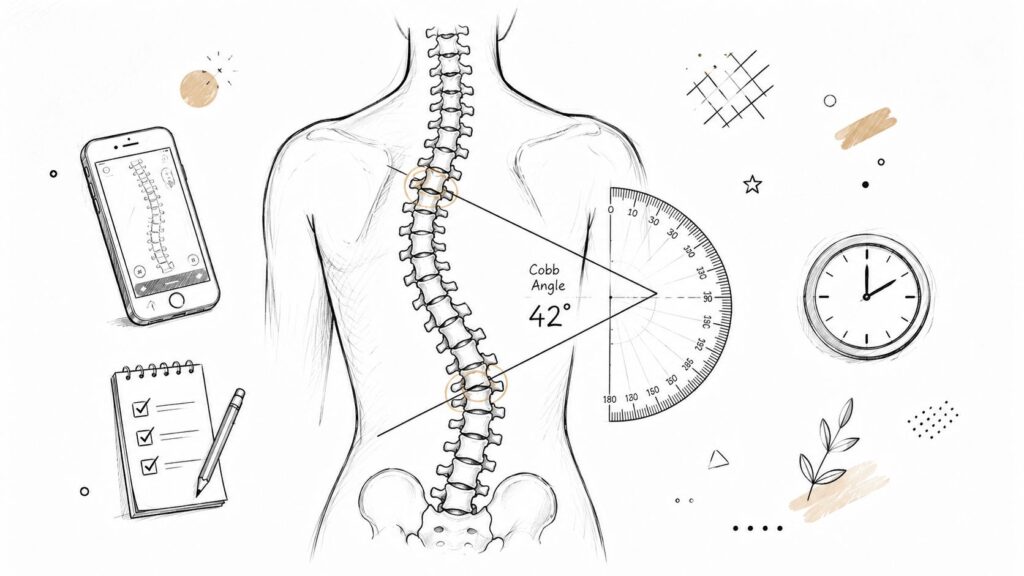
A parent is often holding a printed spine report long before they know what the number means. A teen might be looking at the same page after a follow-up visit, trying to work out whether 18°, 27°, or 41° changes everything. The confusion usually starts there, because the number looks precise, but the decision behind […]
AI in Spine Health: A Clinician’s Guide
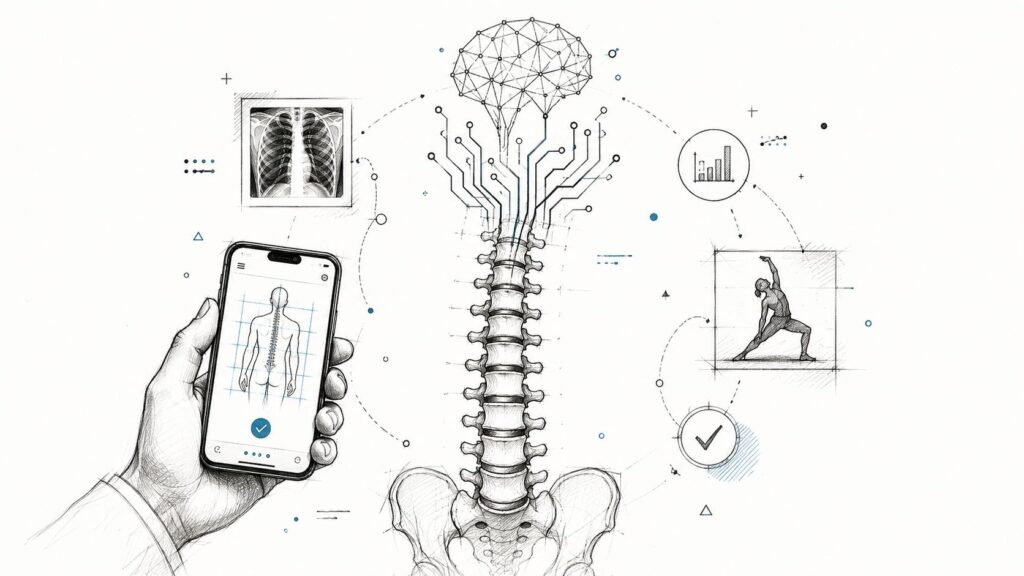
If you work in spine care today, you've likely felt the same tension from both sides of the room. A surgeon wants cleaner measurements before planning intervention. A physiotherapist wants better visibility between visits. Parents of a child with scoliosis want reassurance without another round of imaging unless it's strictly necessary. That friction sits at […]
Delayed Scoliosis Diagnosis: Identify Risks & Next Steps
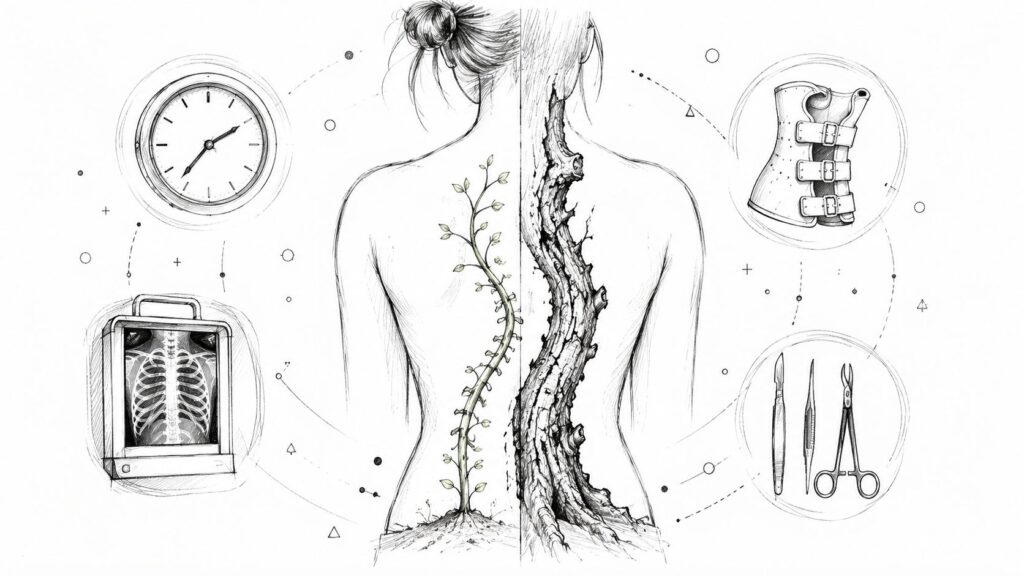
You notice it while your child is changing for sport. One shoulder looks a little higher. A waistband sits unevenly. A school jumper that fit normally a few months ago now hangs slightly twisted. Your teenager shrugs it off and says they feel fine. That's exactly why delayed scoliosis diagnosis can be so unsettling. The […]