
School Scoliosis Screening: What Parents Should Know
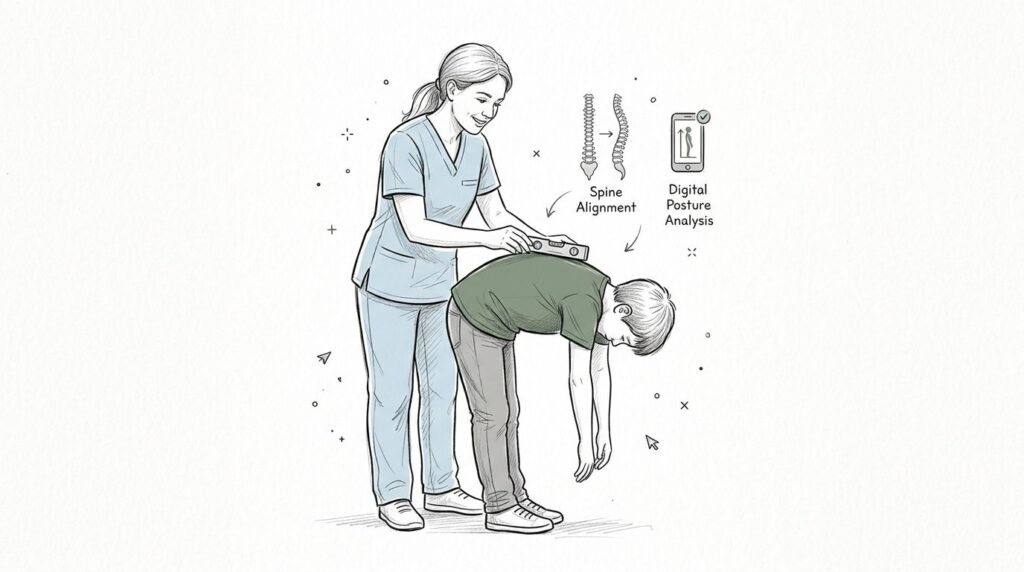
A consent letter falls out of your child's school bag, and the words scoliosis screening immediately raise questions. Is something wrong? Will the test hurt? What happens if the school finds a curve? Those concerns are understandable. School screening is a brief, non-invasive check designed to identify possible spinal asymmetry, not to diagnose a medical […]
Smartphone Scoliosis Screening Explained Simply
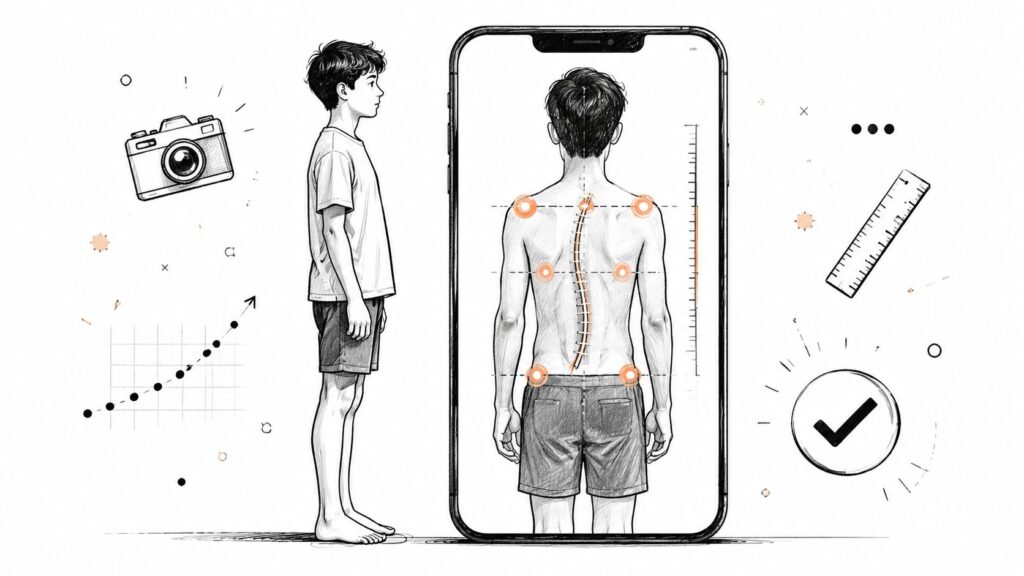
A 13-year-old notices that the hem of her shirt keeps pulling to one side. In the mirror, one shoulder seems higher, and her mum spots a small prominence near one shoulder blade. The teenager reaches for the phone in her pocket and asks, “Can this really check my spine?” That's a sensible question. Smartphone scoliosis […]
Poor Posture vs Scoliosis: How to Tell the Difference
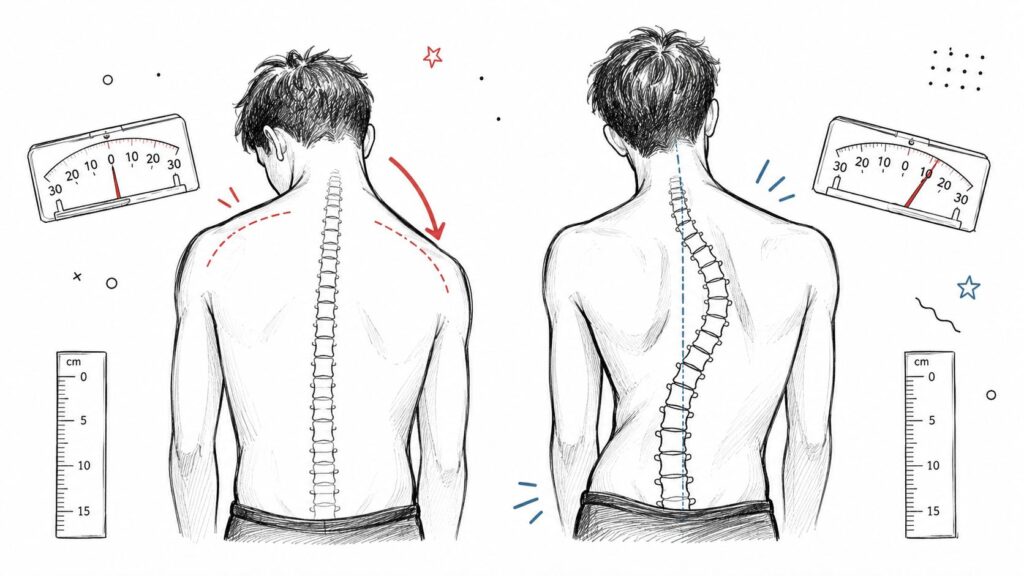
You notice it at the end of a school morning: one shoulder sits a little higher, a T-shirt hangs oddly, and your child says nothing hurts. That's the awkward moment where poor posture vs scoliosis starts to matter, because one can be a temporary stance and the other can be a structural spinal curve that […]
Scoliosis Physical Examination: A Step-by-Step Guide
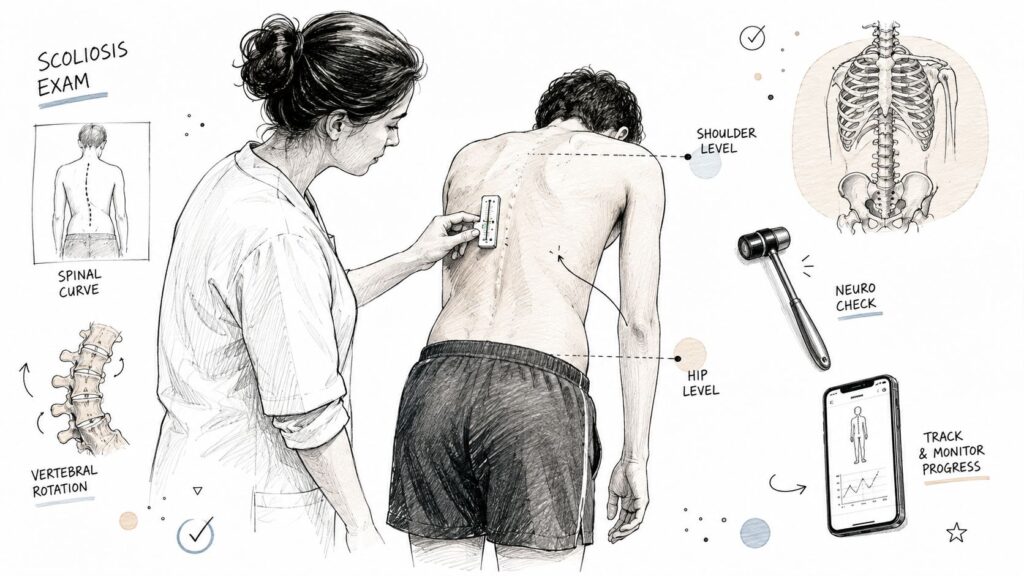
You're in clinic, and the parent has noticed one shoulder sits a little higher, or a school screening has sent a note home about a possible curve. The next step isn't to jump straight to an X-ray. It's a careful scoliosis physical examination, because the bedside assessment still decides whether what you're seeing is likely […]
Posture Analysis for Scoliosis: Early Detection Methods
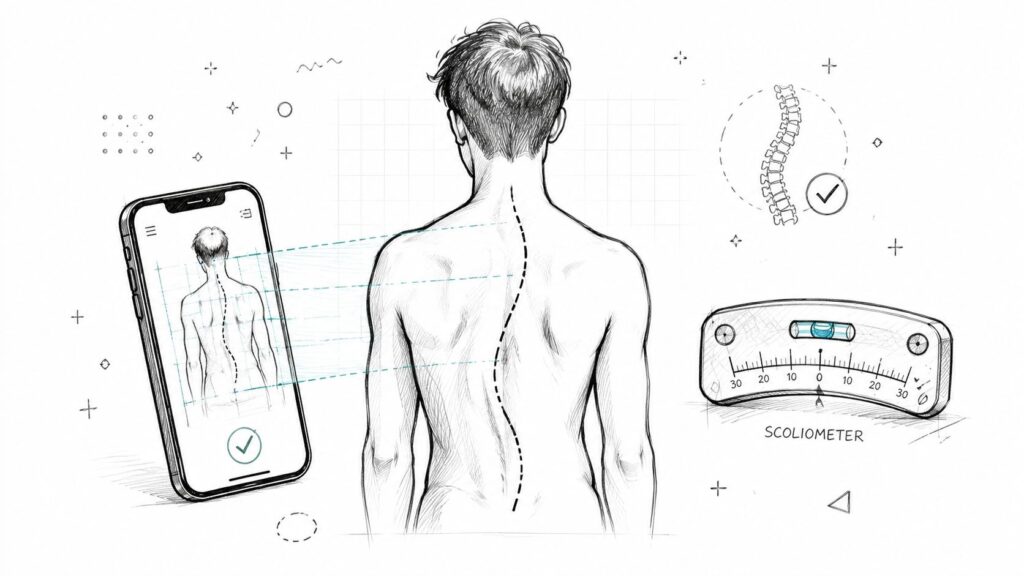
If you're staring at a child's photo and thinking, “One shoulder looks higher than the other,” you're not overreacting. That small asymmetry is often the moment people start looking for answers, and posture analysis for scoliosis gives them a structured way to look, measure, and decide what needs follow-up. Used well, it helps separate everyday […]
The Rise of Digital Scoliosis Screening Tools
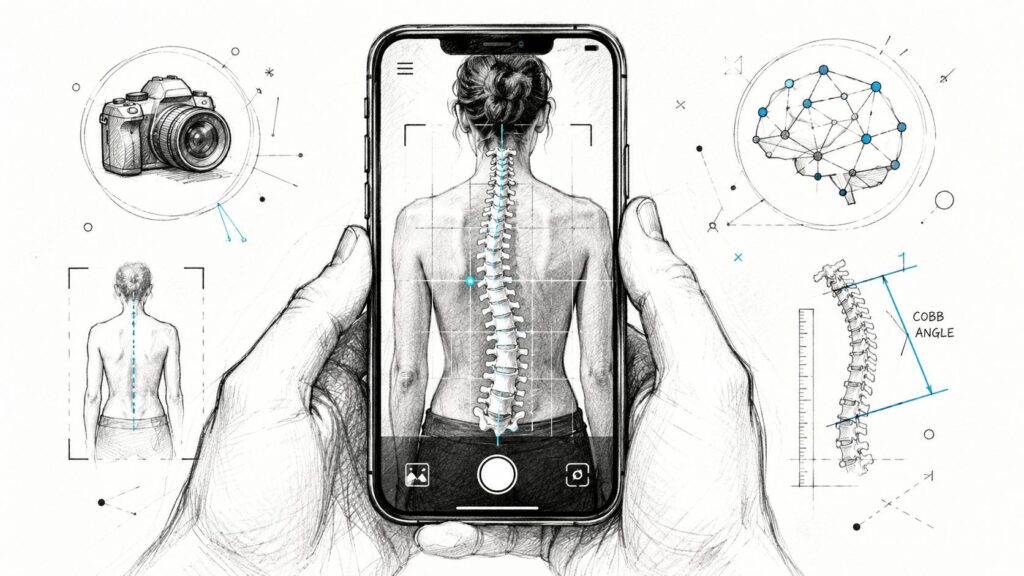
You've probably seen the first hint in a school photo, a sports day snapshot, or a quick glance in the bathroom mirror. One shoulder looks higher, the waistline seems uneven, and now you're trying to work out whether this is just posture or something that needs a proper check. That is exactly where digital scoliosis […]
Cobb Angle Scoliosis Severity: A Clinician’s Guide
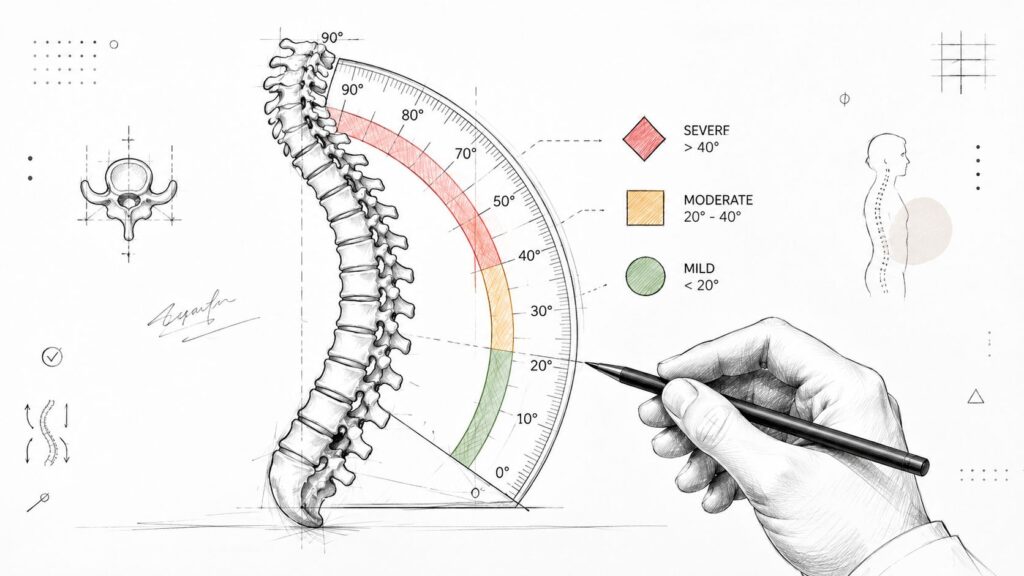
You've got the X-ray report in your hand, or maybe a clinician has just said a number that sounded oddly precise. 18 degrees. 27 degrees. 43 degrees. The figure feels like a verdict, but it's really a decision point, and that difference matters when you're trying to understand what happens next for you or your […]
Scoliosis Detection Without X-Ray: A Complete Guide
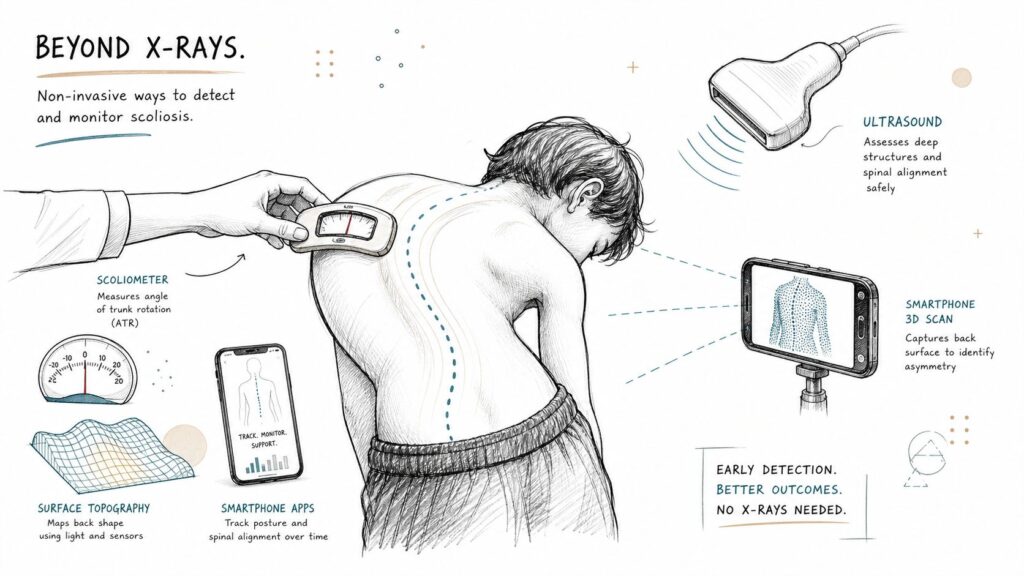
You're standing in a clinic hallway or at your kitchen table with a phone full of photos, a child who's growing fast, and a quiet worry that keeps coming back. The brace checks, posture checks, and follow-up visits all make sense, but the repeated X-rays can start to feel like the only part of scoliosis […]
Scoliosis Detection App: A Clinical Guide
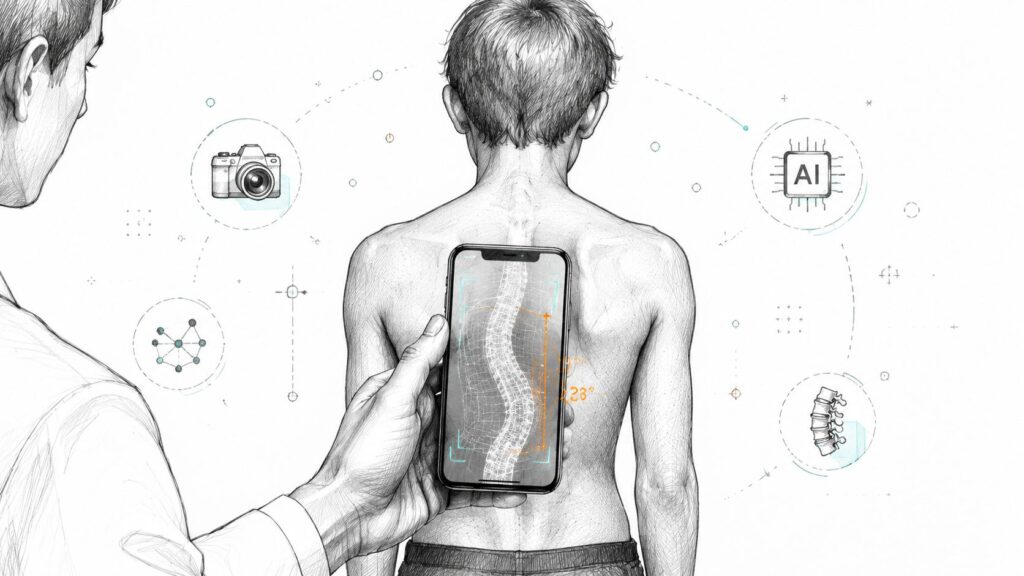
You're at a familiar crossroads. Your child's back is being checked after a sports physical, a school nurse has mentioned uneven shoulders, or your clinic is deciding whether a small curve needs another X-ray or just closer follow-up. A scoliosis detection app sits right in that space, promising easier monitoring without turning every concern into […]
Scoliosis Detection in Children: A Comprehensive Guide
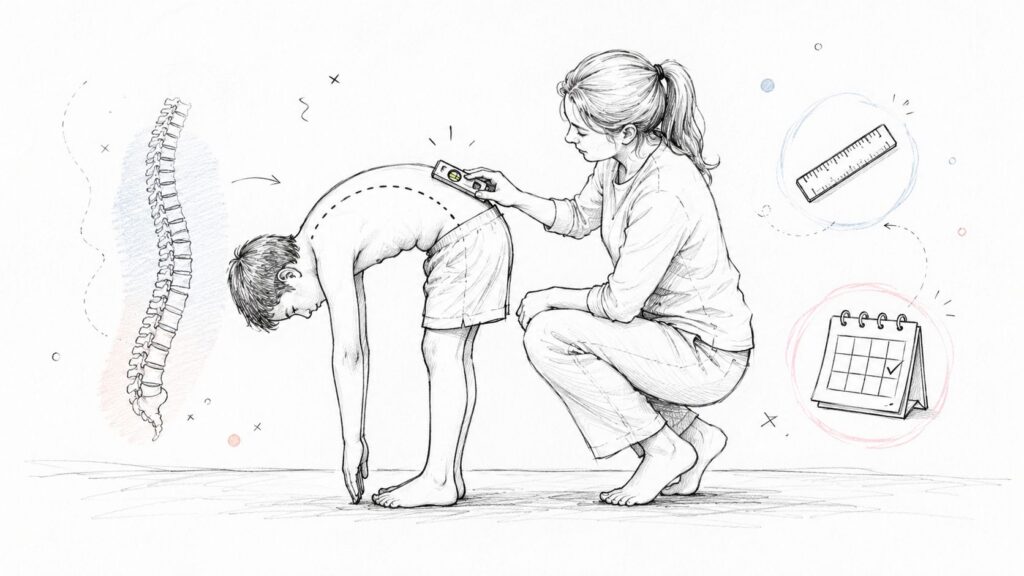
A lot of parents first notice scoliosis in an ordinary moment. A shirt hangs lower on one side. A swimsuit strap keeps slipping. A child bends to pick something up, and one side of the back looks slightly higher than the other. None of that automatically means something is wrong, but it does deserve a […]