
Computer Vision Scoliosis: How AI Spots Spinal Asymmetry
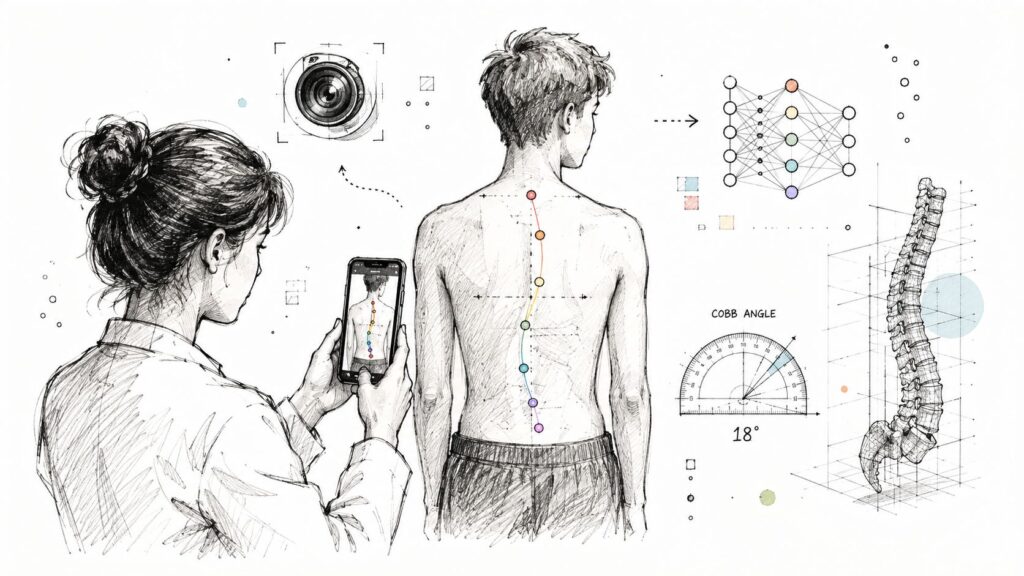
A parent stands in a hallway, asking a teenager to face away from the phone. The room is ordinary, the lighting imperfect, and the concern familiar: one shoulder seems higher, one hip looks different, or the back appears slightly uneven. A camera-based tool may identify that spinal asymmetry deserves attention, but it shouldn't turn a […]
AI Scoliosis Screening: What Can Technology Detect?
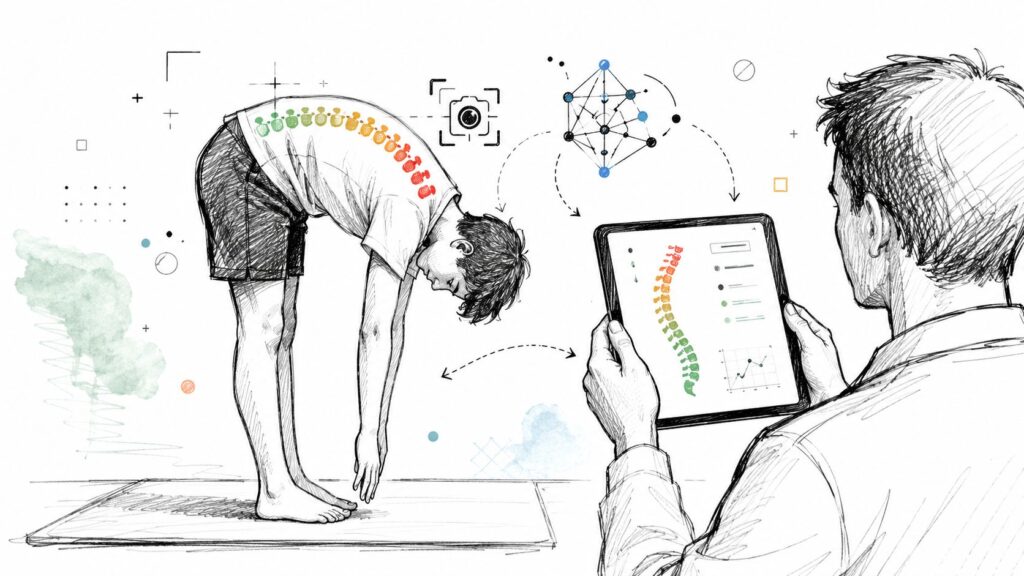
A parent watches a physiotherapist move a tablet across an 11-year-old's back. Within moments, the screen shows a coloured outline of the shoulders, pelvis and spinal midline. The result looks precise, but what does it mean? Can AI scoliosis screening detect a spinal curve, or is it only measuring posture? Those questions matter because a […]
Smartphone Scoliosis Screening Explained Simply
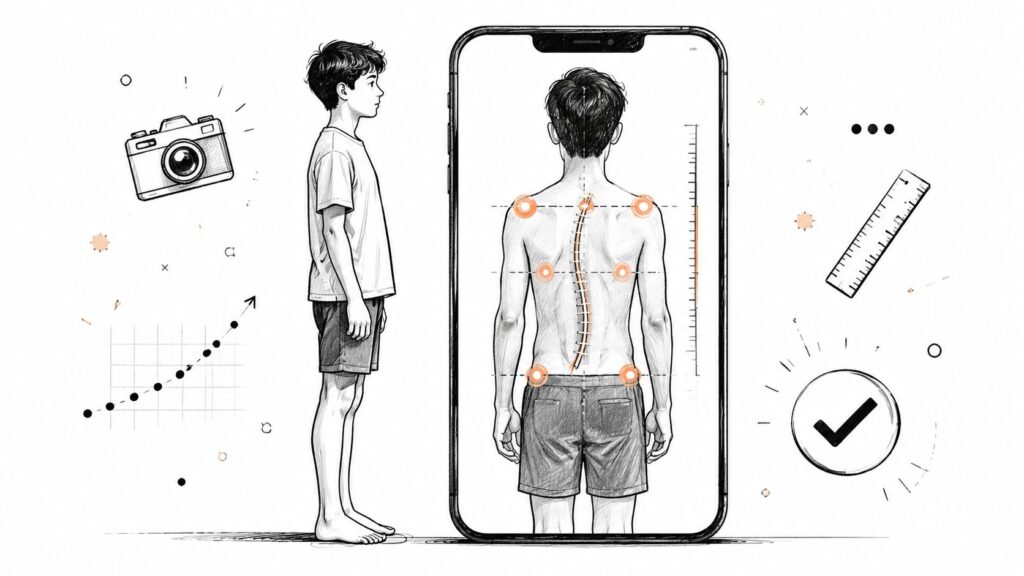
A 13-year-old notices that the hem of her shirt keeps pulling to one side. In the mirror, one shoulder seems higher, and her mum spots a small prominence near one shoulder blade. The teenager reaches for the phone in her pocket and asks, “Can this really check my spine?” That's a sensible question. Smartphone scoliosis […]
Scoliosis Screening vs Diagnosis: Key Differences Explained
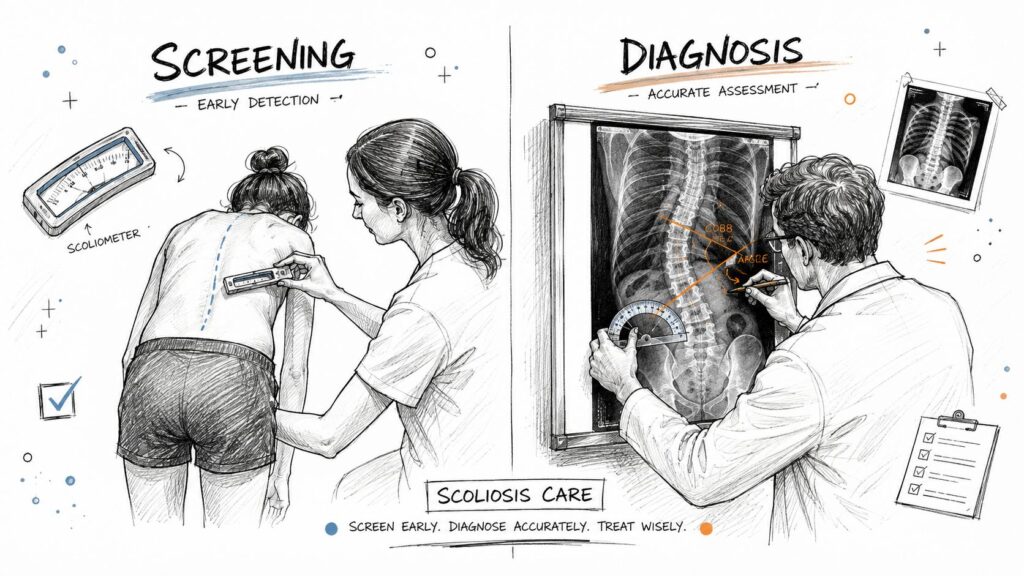
A school letter arrives: your child has a possible spinal curvature and needs further evaluation. Most parents understandably read that as “my child has scoliosis”. It doesn't mean that. The letter usually means a visual check has identified an asymmetry that deserves a closer look. That distinction, scoliosis screening vs diagnosis, determines what happens next. […]
Mild Scoliosis Detection During Routine Checkups
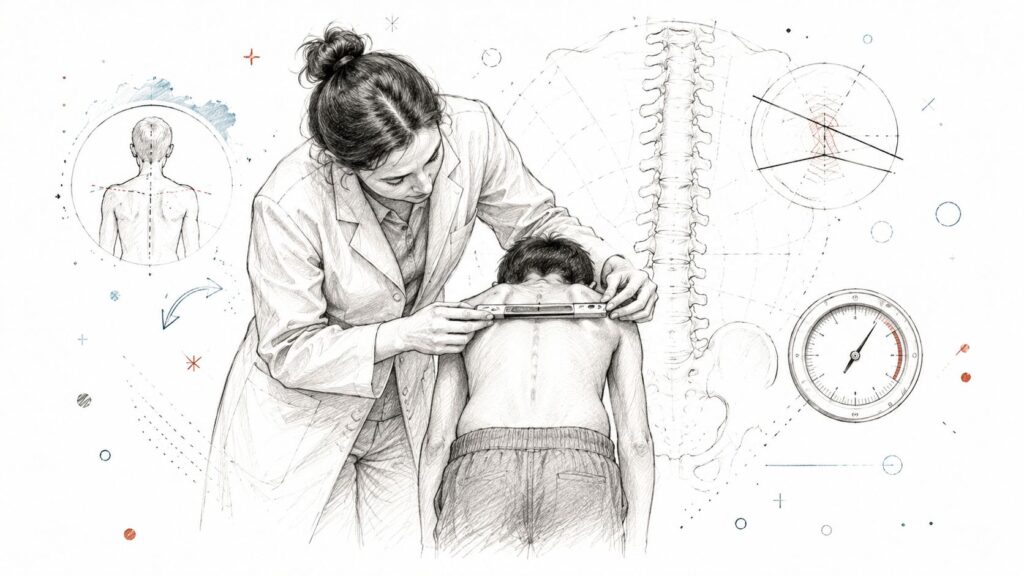
A routine checkup can often identify signs that mild scoliosis may be present, but visual or phone-based screening cannot confirm it. A Cobb angle greater than 10 degrees is required for a diagnosis. A parent may notice that one shoulder sits higher while a child changes for sport, or a clinician may see a rib […]
Uneven Shoulders Scoliosis: Signs, Screening, and Next Steps
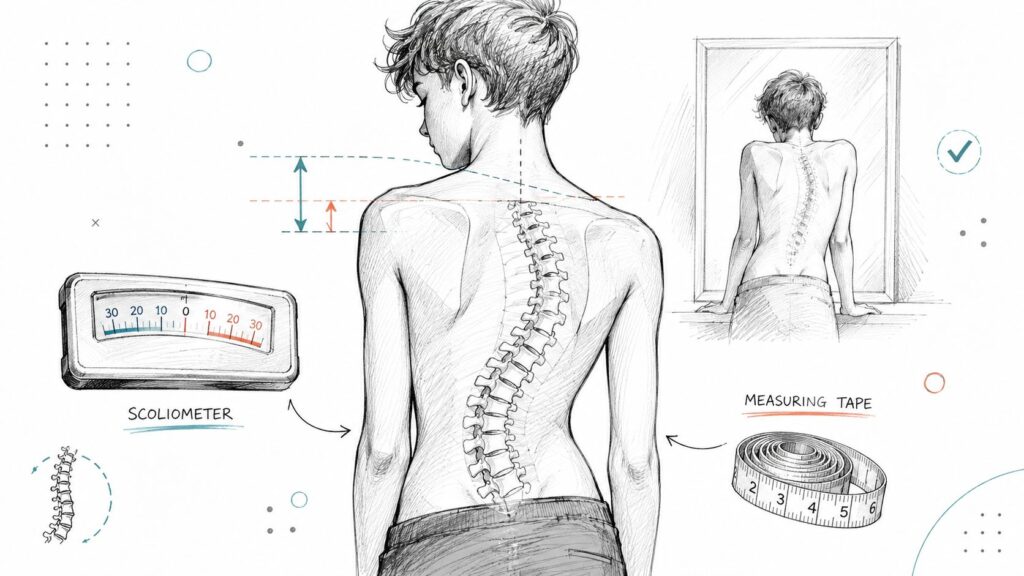
You notice it in a mirror, in a family photo, or when a sleeve hangs differently on each side. One shoulder looks a little higher, the other seems to drop away, and suddenly you're wondering whether it's just posture or something more. That moment is common, and it's exactly where uneven shoulders and scoliosis questions […]
Spinal Asymmetry Explained: When It Means Scoliosis
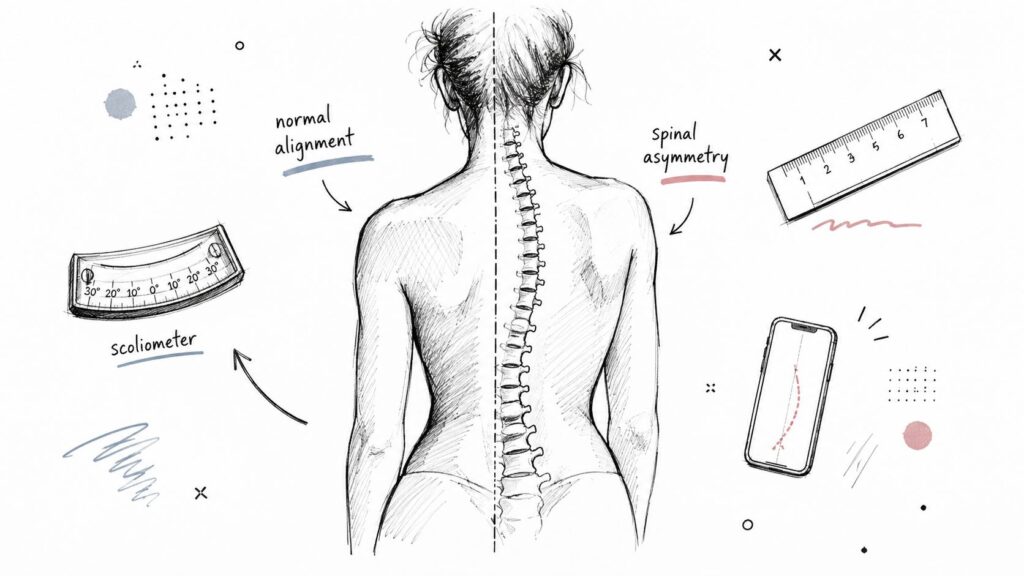
Is every uneven spine a warning sign, or can it be part of normal human variation? That question matters because parents often notice a shoulder that sits a little higher, a rib cage that looks slightly fuller on one side, or a back that seems off-centre, then assume the worst. In clinical practice, spinal asymmetry […]
Positive Scoliosis Screening Explained
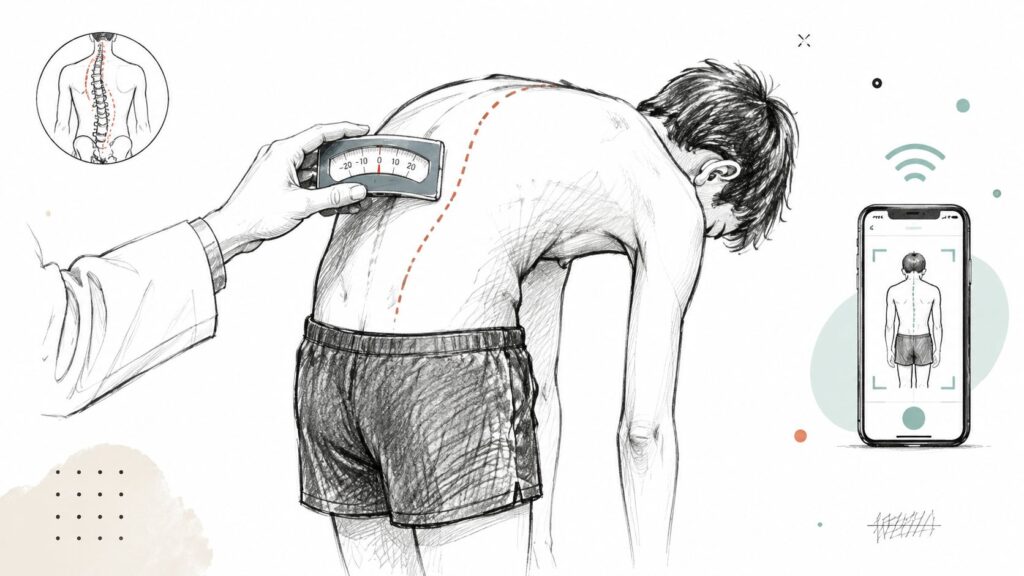
Your child comes home from school with a note, or you spot one shoulder sitting a little higher in the mirror, and suddenly the phrase positive scoliosis screening lands with real weight. That reaction is normal. A screen like this is meant to flag a possible issue, not to announce a diagnosis, and most families […]
Scoliosis Physical Examination: A Step-by-Step Guide
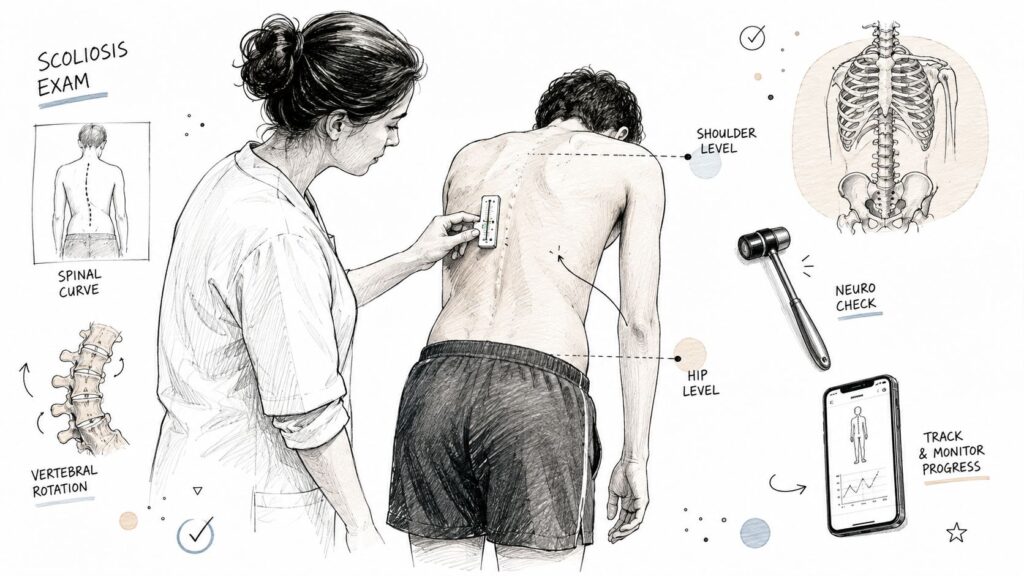
You're in clinic, and the parent has noticed one shoulder sits a little higher, or a school screening has sent a note home about a possible curve. The next step isn't to jump straight to an X-ray. It's a careful scoliosis physical examination, because the bedside assessment still decides whether what you're seeing is likely […]
Scoliosis Without Symptoms: Hidden Signs & Detection
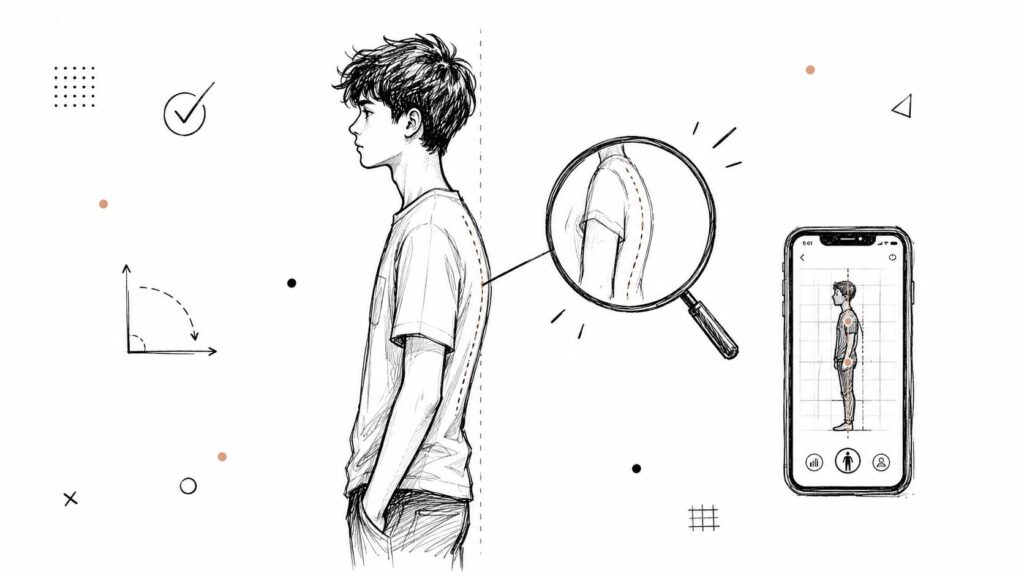
You've probably seen it before. A teen changes for PE, a parent notices one shoulder sits a little higher, or a T-shirt stops hanging quite right, yet nobody feels unwell, so the moment passes. That quiet gap is exactly where scoliosis without symptoms can stay hidden, sometimes for years, until a school screen, a routine […]