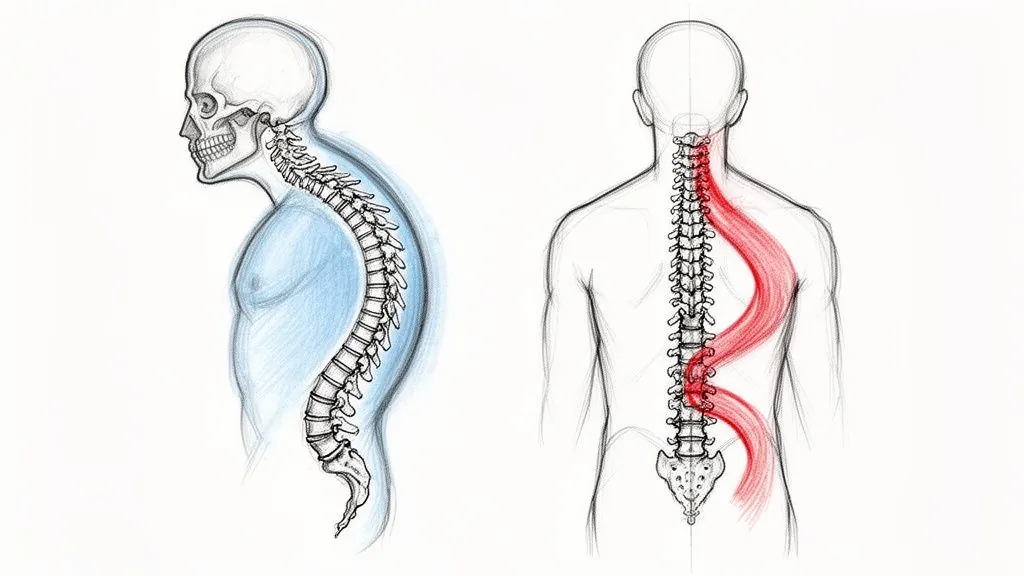
When people talk about spinal curves, kyphosis and scoliosis are two of the most common conditions that come to mind. While both involve an abnormal shape of the spine, they are fundamentally different. The simplest way to put it is that they curve in entirely different directions.
Kyphosis is an excessive forward rounding of the upper back, which many people picture as a "hunchback" or slouch. Scoliosis, on the other hand, involves a sideways curve of the spine, often in an “S” or “C” shape.
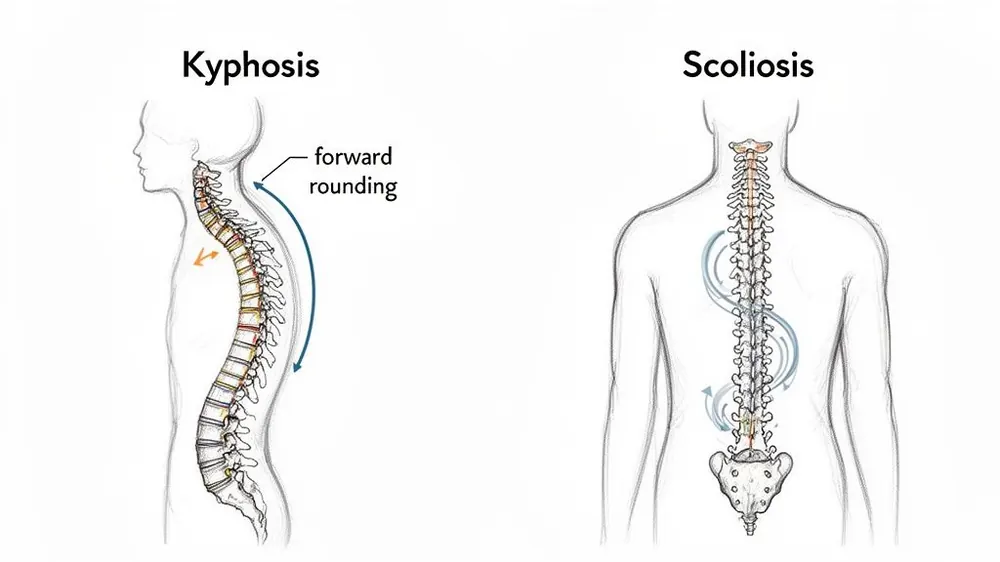
Think of it in terms of how you'd view the person. You see kyphosis most clearly from the side (the sagittal plane), while scoliosis is most apparent when looking at someone from the front or back (the coronal plane). This isn't just a technical distinction; it shapes everything from the visible symptoms to the underlying causes and typical age of onset.
Key Visual and Causal Differences
A rounded upper back is the classic sign of kyphosis. It can stem from something as simple as long-term poor posture (postural kyphosis) or be caused by a structural problem with the vertebrae, like in Scheuermann's disease.
Scoliosis often shows up differently. You might notice that someone's shoulders or waistline look asymmetrical, or that one side of their rib cage is more prominent than the other.
In my experience, the easiest way for patients to understand the difference is this: Kyphosis is a forward bend, like an exaggerated slouch. Scoliosis is a side-to-side curve, an alignment that is never normal for the spine.
To give you a clearer picture, here’s a quick breakdown of the core differences.
At-a-Glance Comparison: Kyphosis vs Scoliosis
This table summarises the main distinguishing features, offering a quick reference to tell these two conditions apart.
| Feature | Kyphosis | Scoliosis |
|---|---|---|
| Plane of Curvature | Sagittal Plane (Forward Rounding) | Coronal Plane (Sideways "S" or "C" Curve) |
| Common Visual Sign | "Hunchback" or rounded upper back | Uneven shoulders, waist, or hips; rib hump |
| Typical Onset | Adolescence (Scheuermann's); Older Adults (Degenerative) | Adolescence (Idiopathic); All ages for other types |
| Primary Causes | Posture, Scheuermann's disease, osteoporosis, congenital | Often idiopathic (unknown), congenital, neuromuscular |
It's important to realise that although they are distinct, these conditions aren't mutually exclusive. It's possible for someone to have both, which is known as kyphoscoliosis – a complex 3D deformity.
Before diving into the finer points of diagnosis and treatment, getting a firm grasp on these foundational differences is key. If you're interested in exploring the different sideways curvatures in more depth, you can learn more about the types of scoliosis in our in-depth guide.
Understanding Anatomical Differences in Spinal Curvature
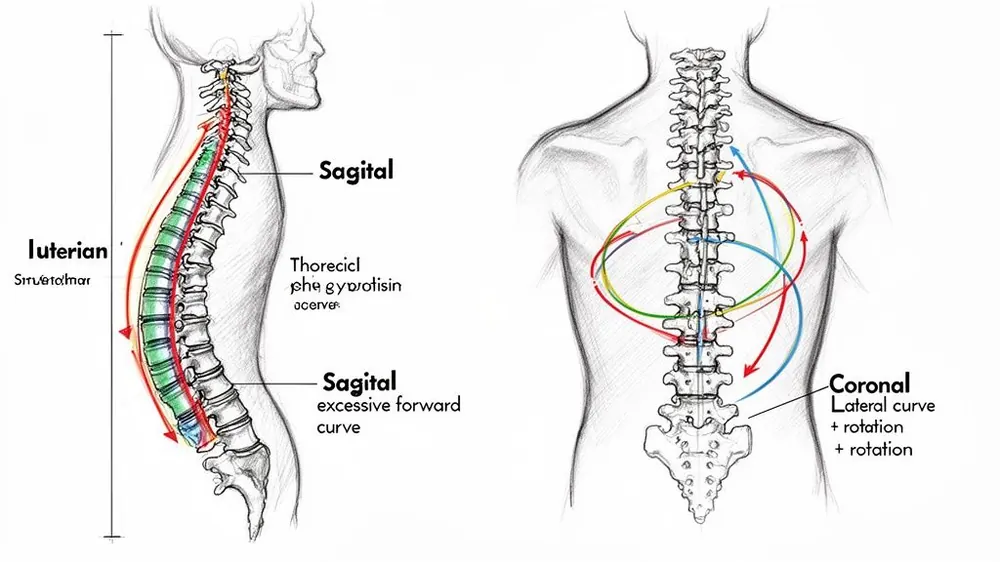
While it’s easy to think of kyphosis as a "hunchback" and scoliosis as an "S-curve," that's just scratching the surface. To properly diagnose and manage these conditions, we have to look deeper at the spine's anatomy. The key isn't just the direction of the curve, but the plane of motion it exists in and whether the spine's structure itself has changed.
Kyphosis is fundamentally a sagittal plane problem. Think of looking at someone from the side; this is the sagittal view. Kyphosis is an excessive forward curve in this plane, creating that rounded or hunched appearance, most often in the thoracic (mid-to-upper back) region.
But not all forward curves are created equal. The specific type of kyphosis tells a clinician everything about its likely progression and the best path forward for treatment.
The Different Faces of Kyphosis
Kyphosis comes in a few distinct forms, and knowing which one you're dealing with is the first critical step.
Postural Kyphosis: This is the most common and mildest type. It’s a flexible curve caused by habits like slouching and weak back muscles. The telling sign is that a person can actively straighten their spine. It’s a functional issue, not a structural one.
Scheuermann's Kyphosis: This is a different beast entirely. It’s a rigid, structural deformity that usually shows up during the teenage growth spurt. Here, the vertebrae themselves are misshapen; at least three in a row become wedged, creating a stiff, sharp curve that can't be consciously straightened.
Congenital Kyphosis: Though the least common, this type is often the most serious. It's a structural problem present at birth because the vertebrae didn't form correctly in the womb. This condition often requires early intervention to prevent it from getting worse.
The core distinction lies in flexibility. If you can straighten the curve simply by standing tall, it's likely postural. If the curve is fixed and rigid, you're looking at a structural issue like Scheuermann’s. This simple hands-on assessment offers a powerful initial clue.
Scoliosis: A True Three-Dimensional Challenge
Now, let's pivot to scoliosis. Where kyphosis is a relatively straightforward sagittal plane issue, scoliosis is a much more complex three-dimensional (3D) deformity.
Its most obvious feature is the side-to-side curve in the coronal plane – the one you see from the front or back. But that’s only part of the story. Scoliosis almost always involves vertebral rotation along the transverse plane. Imagine the vertebrae twisting on themselves like a spiral staircase.
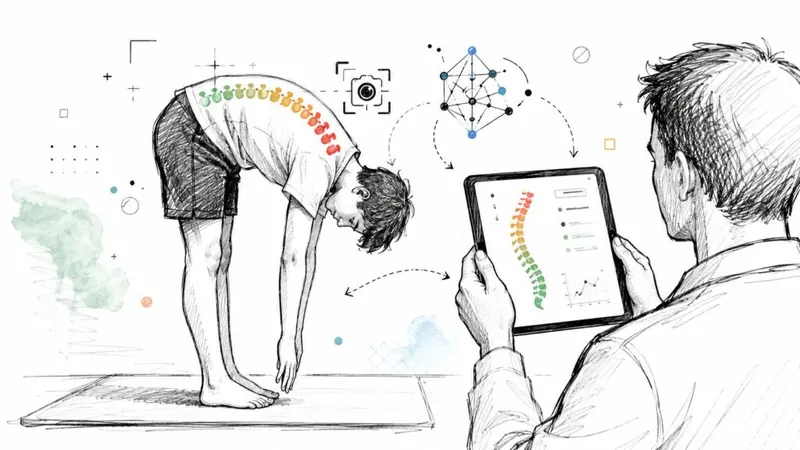
This twisting is exactly what causes the "rib hump" that becomes visible during an Adams forward bend test, as the rotation pushes the ribs on one side backwards. This 3D nature is the fundamental anatomical difference between scoliosis and kyphosis.
And just like kyphosis, scoliosis isn’t a single diagnosis but a category with several origins.
Idiopathic Scoliosis: This is by far the most common type, making up about 80% of all cases. "Idiopathic" simply means we don't know the cause. It typically emerges just before puberty.
Congenital Scoliosis: Like its kyphotic counterpart, this form is caused by malformed vertebrae from birth. Bones may be fused together or only partially formed, throwing off the spine's alignment as a child grows.
Neuromuscular Scoliosis: This type develops as a secondary result of a condition that affects the nerves or muscles, like cerebral palsy or muscular dystrophy. When the muscles can't properly support the spine, a curve can develop.
So, when we compare kyphosis vs scoliosis, we’re not just talking about a front view versus a side view. We’re contrasting a sagittal imbalance against a complex 3D rotation, and a flexible posture against a rigid structural deformity. Understanding these distinctions is absolutely vital for anyone involved in spinal health.
Identifying Causes and Risk Factors Across the Lifespan
The story of how kyphosis and scoliosis begin is rarely the same, as the causes are so closely tied to our stage in life. What puts an adolescent at risk is completely different from what might cause a spinal curve in an older adult. Understanding this timeline is fundamental to catching these conditions early and creating a treatment plan that actually works.
During adolescence, everything revolves around the explosive growth spurts that define those years. This is the prime window for both idiopathic scoliosis and Scheuermann's kyphosis to first appear. A spine undergoing such rapid development is uniquely vulnerable, which is why a watchful eye during this time is a clinical priority.
As we look at adults and seniors, the conversation shifts from developmental hurdles to the cumulative effects of ageing. The focus turns to degenerative changes, where a lifetime of wear and tear, often combined with lifestyle factors, becomes the main driver of spinal deformities.
Adolescent Onset: The Growth Spurt Connection
When comparing kyphosis vs scoliosis, adolescence is a critical period. This is when idiopathic scoliosis, which makes up around 80% of all scoliosis cases, tends to show up. "Idiopathic" simply means we don't know the exact cause, but we do know it most often surfaces just before puberty, typically between the ages of 10 and 15.
This is precisely why early screening programs are so essential. For instance, proactive initiatives in California's public schools have been a cornerstone of early detection since 1982. Mandated by Section 49452.5 of the Education Code, these screenings check girls in grade 7 and boys in grade 8, targeting the peak years for growth when a curve can progress quickly. This early intervention pays off, as bracing can successfully stop curve progression in 70-80% of moderate cases if started soon enough. You can learn more about the impact of these programs by exploring the full details of age-related spinal changes.
For kyphosis in teenagers, the main culprit is Scheuermann's disease. This isn't the same as postural kyphosis, which comes from slouching and is flexible. Scheuermann's is a structural problem that happens when the front part of the vertebrae grows more slowly than the back, forcing them into a wedge shape. The result is a rigid, forward hunch in the upper back.
The crucial takeaway for parents and clinicians is that the adolescent growth spurt is a high-risk time for permanent spinal changes. Keeping an eye out for signs like uneven shoulders (scoliosis) or a fixed, rounded back (Scheuermann's kyphosis) during these years is the key to timely intervention.
Adult and Senior Risk Factors: The Degenerative Shift
As we get older, the reasons behind kyphosis and scoliosis change from developmental to degenerative. The spine, just like our hips and knees, is susceptible to a lifetime of wear and tear.
With kyphosis, the most common type seen in older adults is age-related hyperkyphosis. This gradual increase in the spine's forward curve is often pushed along by a few key factors:
Osteoporosis: When vertebrae weaken, they can suffer compression fractures, causing them to collapse and wedge forward.
Muscle Weakness: The back extensor muscles, which help you stand up straight, naturally weaken with age.
Degenerative Disc Disease: The cushions between our vertebrae lose their height and moisture, contributing to spinal misalignment over time.
This combination is what creates the "hunchback" posture often associated with ageing, which can seriously affect a person's balance, mobility, and even their ability to breathe properly.
When it comes to scoliosis, the most common form in this age group is degenerative scoliosis, also known as de novo scoliosis. It develops in a previously straight spine, usually after age 50. It's caused by the uneven breakdown of the spine’s facet joints and discs, which makes the spine sag and curve to the side. Unlike the scoliosis seen in teens, degenerative scoliosis is frequently painful due to related issues like spinal stenosis or pinched nerves.
When a patient comes in with a potential spinal curve, my first job is to get a handle on what I'm looking at. That process always starts with a hands-on physical exam. It’s the quickest way to start differentiating between kyphosis and scoliosis and to feel whether the curve is flexible or a more rigid, structural problem.
A simple but incredibly effective tool for this is the Adams forward bend test. I have the patient bend at the waist, keeping their knees straight and letting their arms hang loose. If it’s scoliosis, this movement will almost always reveal a “rib hump” – one side of the back will be noticeably higher than the other because of the spine's rotation. With kyphosis, the forward bend just makes that rounded upper back even more obvious, giving me a better sense of its severity.
This initial assessment is also where we consider age-related risks, which can point us in the right direction from the get-go.
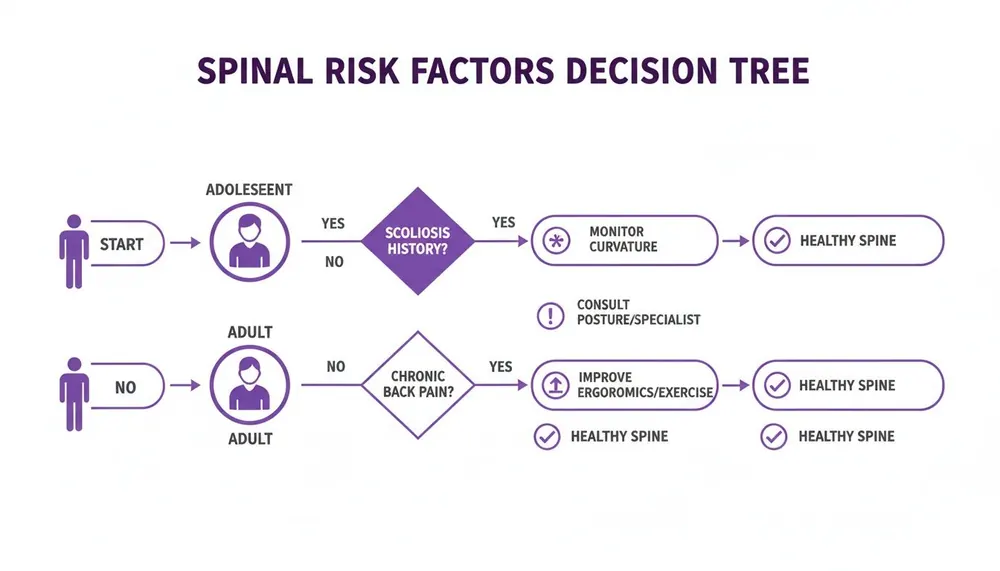
As you can see, the factors we watch for in a teenager hitting a growth spurt are quite different from the degenerative issues we might suspect in an older adult. There's no one-size-fits-all approach here.
The Cobb Angle: A Universal Metric
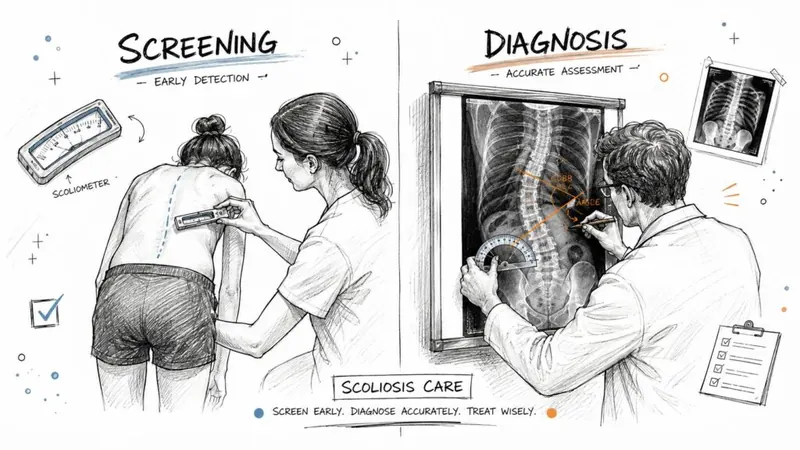
Once a curve is confirmed visually, we need to put a number on it. For that, we turn to imaging. The Cobb angle is the established method across the board, measured from an X-ray to determine just how significant the spinal deformity is. While we use the same term for both conditions, how we measure it differs entirely, reflecting the different planes of curvature in a kyphosis vs scoliosis comparison.
Here's how that plays out in practice:
For Kyphosis: We look at a lateral (side-view) X-ray. The angle measures the forward hunch in the sagittal plane. Clinically, we start calling it hyperkyphosis when the angle exceeds 40-45 degrees.
For Scoliosis: The measurement comes from an anteroposterior (front-to-back) X-ray. This tells us the degree of the sideways curve in the coronal plane. Any curve greater than 10 degrees officially meets the definition of scoliosis.
The Cobb angle is the universal language of spinal deformity assessment. It transforms a visual observation into a concrete number, allowing clinicians to classify the curve's severity, predict its likelihood of progression, and make informed decisions about treatment.
Of course, X-rays are the definitive tool for that first diagnosis, but relying on them for ongoing monitoring brings up valid concerns about radiation exposure. This is a particular worry for kids and teens who might need check-ups every few months. If you want to dive deeper into this, our guide on X-rays for scoliosis diagnosis and monitoring covers the topic in detail. Fortunately, technology is giving us new, safer ways to keep an eye on things.
Modern Tools for Frequent and Safe Monitoring
This is where radiation-free tools are making a real difference in how we manage these conditions long-term. A great example is PosturaZen, which was designed to fill the long gaps between clinic appointments and their corresponding X-rays.
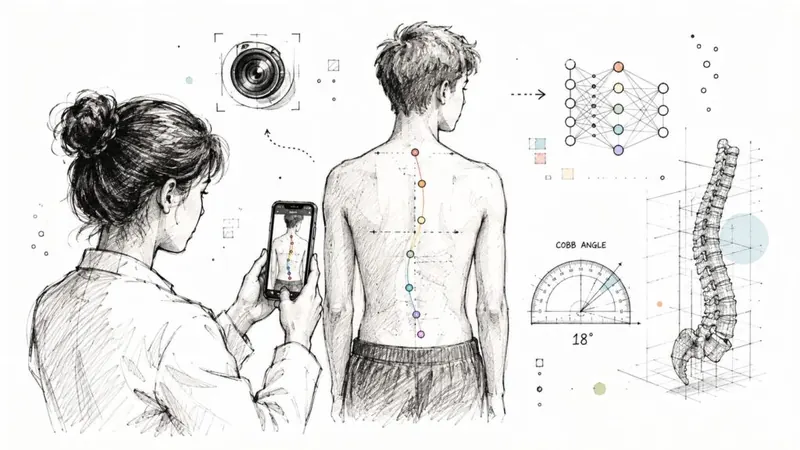
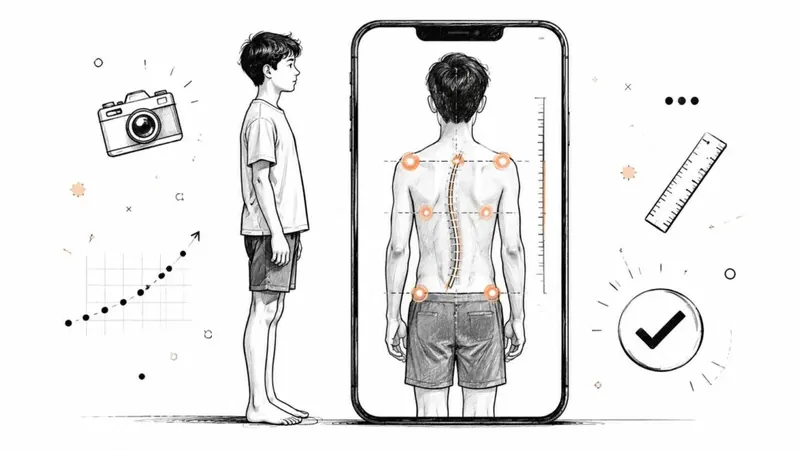
Using just a smartphone camera, PosturaZen can run a postural analysis that gives a very reliable estimate of the Cobb angle for both kyphosis and scoliosis – without any radiation. It creates 3D models of the spine and tracks key metrics like shoulder and hip imbalances, giving patients and clinicians a way to monitor the spine from home. This kind of frequent data can catch subtle changes much earlier than an X-ray scheduled six months down the line.
This is especially critical for certain high-risk groups. For instance, in patients with achondroplasia, spinal deformities are far more common. Studies from specialised California centres show a staggering 60% scoliosis prevalence and an even higher 79% thoracolumbar kyphosis prevalence. Unlike the more common adolescent cases, kyphosis is the dominant issue here. For specialists managing these complex cases, having a tool like PosturaZen for radiation-free tracking is invaluable. It helps us stay ahead of progression and fine-tune care without the downside of repeated imaging.
By blending these modern tools with traditional diagnostic methods, we can create a much more responsive and personalised approach, ensuring our treatment plans are always built on the most current picture of a patient's spinal health.
Comparing Treatment and Management Strategies
When it comes to treating kyphosis and scoliosis, the goals couldn't be more different. This is because we're dealing with curves in entirely separate planes of motion. With scoliosis, our primary aim is to stop the sideways curve from getting worse and to de-rotate the spine. For kyphosis, the focus is all about restoring the natural front-to-back balance (sagittal balance) and building up the muscles that hold you upright.
This fundamental difference in the kyphosis vs scoliosis comparison shapes every decision we make in a management plan, from simple observation to complex surgery. Every treatment path is highly personalised, taking into account the severity of the curve (measured by the Cobb angle), the patient’s age and how much growth they have left, and the real-world impact the condition is having on their life.
Non-Surgical Interventions: A Tale of Two Approaches
For mild to moderate curves, non-surgical methods are always our first line of defence. But the specific exercises and braces we recommend are tailored to the unique biomechanics of each condition.
For scoliosis, specialised physiotherapy programs like the Schroth Method are a cornerstone of treatment. This isn't just generic back strengthening; it's a highly specific approach that uses customised exercises to de-rotate, lengthen, and stabilise the spine in three dimensions. The idea is to build a "muscular corset" that internally supports the spine against the curve's progression.
Physiotherapy for kyphosis, especially the common postural type, is quite different. Here, we zero in on extension-based exercises. These movements are designed to strengthen the weak back extensor muscles while simultaneously stretching the tight pectoral muscles in the chest. This combination helps pull the shoulders back and encourages a more naturally upright posture.
For a patient with scoliosis, I might prescribe an exercise that involves rotational breathing to expand the collapsed side of their rib cage. For a kyphosis patient, the focus would be on movements like scapular retractions and thoracic extensions to directly combat the forward rounding.
This targeted strategy extends to bracing, too. While we might use a brace for either condition during a teenager's growth spurt, the braces themselves are engineered to do very different jobs. You can dive deeper into this in our guide to back braces for scoliosis.
Scoliosis Bracing: A device like the Boston brace is built to apply direct, corrective pressure to the peak of the sideways curve. It physically pushes the spine back towards a straighter alignment to halt progression.
Kyphosis Bracing: A brace like the Milwaukee brace, easily identifiable by its neck ring, works differently. It acts more as a dynamic reminder, encouraging the patient to actively correct their posture and extend their spine. It's often used for more significant or rigid kyphotic curves.
Surgical Goals: Restoring Different Balances
When a curve becomes severe, typically with a Cobb angle over 50 degrees, and conservative treatments aren't enough to stop its progression, surgery often becomes the next logical step. While spinal fusion is the standard procedure for both conditions, the surgical objectives are worlds apart.
A scoliosis fusion is all about correcting the sideways bend and the twist of the vertebrae, effectively realigning the spine in the coronal (front-view) plane. A surgeon uses a system of rods and screws to pull the spine into a straighter position, then fuses the vertebrae together to make that correction permanent.
A kyphosis fusion, in contrast, is focused on restoring sagittal balance. The procedure involves reducing the excessive forward curve and stabilising the spine in a more natural, upright alignment. The goal is to relieve pain and prevent the curve from worsening. This is especially important in older adults; prevalence rates for scoliosis and hyperkyphosis diverge significantly with age. For instance, in California, adult scoliosis affects 8% of those over 25 but climbs to 68% of those over 60. Meanwhile, hyperkyphosis is found in 20-40% of adults over 40.
The Role of Technology in Modern Management
No matter which treatment path is chosen, consistent monitoring is absolutely essential for a good outcome. This is where modern tools like PosturaZen come into play, helping to connect what happens in the clinic with the patient's daily life at home.
For patients doing their prescribed exercises, the AI Workout Companion provides real-time feedback on their form. It ensures they are correctly firing the right muscles for their specific condition, whether that’s a complex Schroth exercise for scoliosis or a simple extension exercise for kyphosis.
Beyond the exercises, progress dashboards give both patients and clinicians a constant stream of data. This helps everyone track how well the treatment is working and allows for timely adjustments, all without having to rely solely on periodic X-rays. This continuous feedback loop empowers a more proactive approach to management, leading to better long-term results.
How Modern Technology Is Shaping Spinal Health
Anyone who manages spinal conditions like kyphosis and scoliosis knows the classic dilemma. X-rays are our gold standard for measuring a curve, but we’re rightly cautious about frequent radiation exposure, especially for kids and teens during their critical growth years. This creates an information vacuum between appointments.
Those long gaps, often six to twelve months, are where problems can hide. Subtle changes can become significant ones without anyone realising, and we miss the chance to intervene early by adjusting a brace or tweaking an exercise plan. We're left reacting to old data, which is a frustrating position for both clinicians and patients.
Bridging the Gap Between the Clinic and Home
This is where new technology is starting to make a real difference, giving us a way to gather meaningful, radiation-free data between formal assessments. A great example of this is PosturaZen, an AI-driven platform that puts clinical-grade insights into the hands of patients and their care teams.
Using a smartphone's camera, PosturaZen conducts a detailed postural scan and provides:
A reliable, radiation-free estimate of the Cobb angle for both kyphosis and scoliosis.
Precise measurements of asymmetries like shoulder height differences and pelvic tilt.
An intuitive 3D visualisation of the spine, which helps patients actually see and understand their alignment.
This approach allows for frequent, safe check-ins, building a detailed picture of how a curve behaves over time. Clinicians can spot trends from progress reports, making data-driven decisions much faster. For patients, seeing their own progress on a dashboard is incredibly motivating and clarifies the link between their hard work and the results.
When you can translate complex spinal data into clear, simple visuals, the entire process becomes less mysterious. Patients shift from being passive recipients of care to active partners in their own health, working with the same information their clinicians see.
Enhancing At-Home Care and Adherence
Beyond just monitoring, technology is also changing how we approach prescribed home care. Condition-specific exercises are fundamental to managing both kyphosis and scoliosis, but their success hinges on one thing: proper form.
The AI Workout Companion in a platform like PosturaZen essentially acts as a virtual physiotherapist. It watches a person's movements during their exercises and gives immediate, corrective feedback. This guidance helps ensure every repetition is performed correctly, maximising the therapeutic effect and lowering the risk of injury.
In the end, the future of managing conditions in the kyphosis vs scoliosis discussion is this partnership between clinical oversight and smart, at-home support. By making proactive, data-rich spinal care more accessible, we can foster earlier interventions, improve how consistently patients follow their treatment plans, and drive better long-term outcomes.
Frequently Asked Questions
When you're trying to understand spinal conditions, a lot of questions come up. Let's tackle some of the most common ones we hear about kyphosis and scoliosis to clear up any confusion.
Can You Have Kyphosis And Scoliosis At The Same Time?
The short answer is yes, absolutely. When someone has both an excessive forward curve (kyphosis) and a sideways curve (scoliosis), the condition is called kyphoscoliosis.
This creates a complex, three-dimensional deformity. Because the spine is affected in multiple directions, managing kyphoscoliosis is often more challenging. Treatment plans have to be carefully crafted to address both the sagittal (forward) and coronal (sideways) imbalances, which is why a thorough diagnosis is so critical.
The presence of kyphoscoliosis creates a true 3D challenge. Treatment isn't just about correcting one curve or the other; it's about restoring overall spinal balance in a way that accounts for the interplay between the forward and sideways deformities.
Is One Condition More Serious Than The Other?
It's a common question, but the truth is, neither condition is inherently "more serious" than the other. The severity of kyphosis or scoliosis really boils down to the specifics of each individual case. Both can range from being a mild, unnoticed issue to a severe, debilitating problem.
What really determines how serious a curve is? We look at a few key factors:
Curve Severity: A large Cobb angle is a major red flag, regardless of the condition.
Cause: A curve stemming from a congenital or neuromuscular problem can be far more complex than one related to poor posture.
Progression: Any curve that is worsening quickly is a greater risk and needs closer attention.
Impact on Quality of Life: Ultimately, the degree of pain, how much it restricts movement, and its effect on vital organs like the heart and lungs define how serious the condition is for that person.
Are There Exercises I Can Do At Home For These Conditions?
Yes, specific, targeted exercises are a cornerstone of non-surgical treatment for both conditions. However, and this is important, they must be tailored to your unique curve pattern by a professional. For scoliosis, you might see methods like Schroth physiotherapy, which focuses on de-rotating the spine and creating length. For kyphosis, the focus is often on strengthening the muscles that pull your shoulders back (back extensors) and stretching out tight chest muscles to counter the forward rounding.
You should always work with a qualified physical therapist to develop a personalised exercise program. That professional guidance is essential to make sure you’re performing movements that help, not harm, your specific spinal curve.
For at-home support, PosturaZen complements professional care with tools like an AI Workout Companion that provides real-time feedback on form, ensuring you get the most out of your prescribed exercises. Learn more and join our community focused on better spinal health at Posturazen.com.