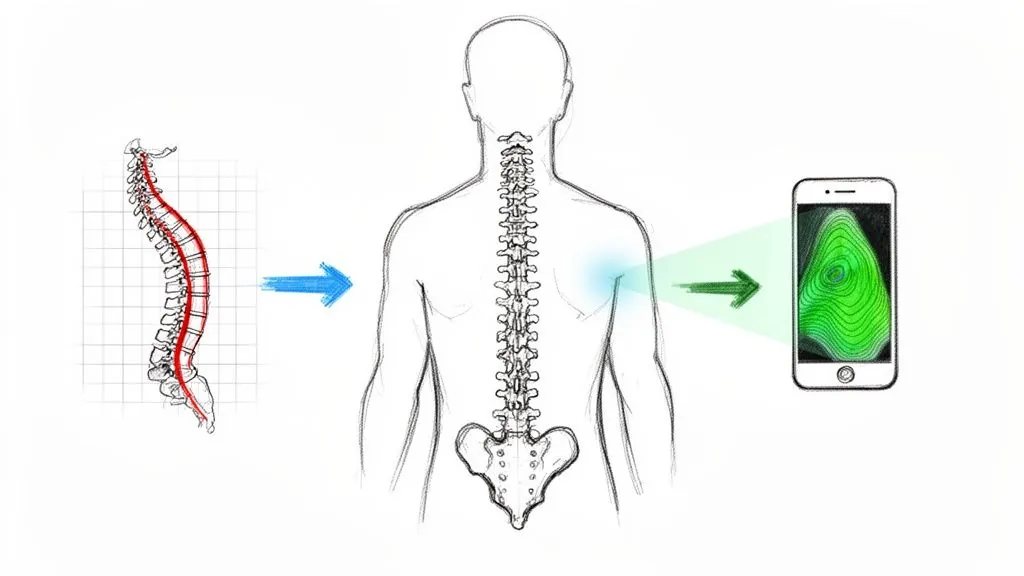
If you or your child is facing a scoliosis diagnosis, one of the first and most common steps in your journey will be an X-ray. These images are fundamental to scoliosis care, giving doctors the clear, internal picture they need to confirm the diagnosis, measure the curve, and map out the right treatment plan.
Why X-Rays Are the Gold Standard for Scoliosis
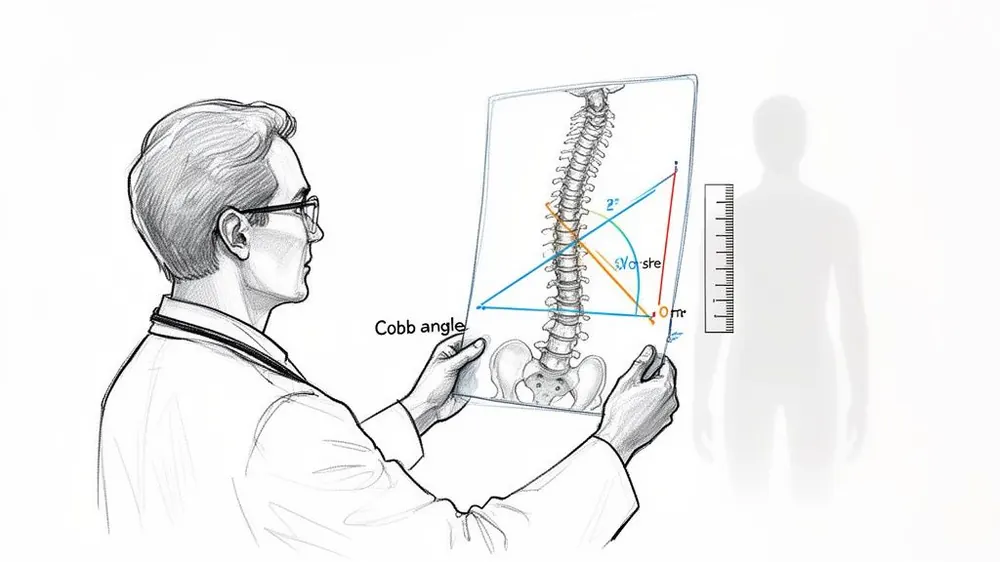
Think of your spine as the structural frame of your body. From the outside, you might notice a slight lean or unevenness, but you can't see what’s happening with the bones themselves. X-rays for scoliosis act like a blueprint, revealing the precise alignment of the vertebrae in a way that no physical exam ever could. This internal view is absolutely vital for making the right clinical decisions.
Defining the Curve with Precision
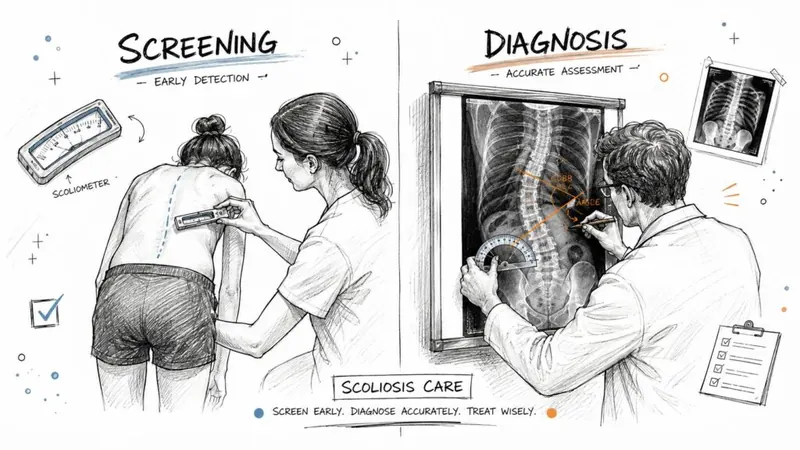
The main reason we rely on X-rays is to measure the Cobb angle. This is the universal standard for determining the severity of a spinal curve, measured in degrees. An accurate Cobb angle is the starting point for every treatment conversation, as it helps everyone decide if the best approach is simple observation, bracing, or if surgery needs to be considered.
Without this objective measurement, any treatment plan would be based on guesswork. The X-ray provides the hard data that allows clinicians to:
Diagnose: To be certain there’s a curve and pinpoint its exact location in the spine.
Measure: To quantify the curve’s severity using the Cobb angle.
Monitor: To track any changes over time, which is especially important during the teenage years when growth spurts can cause a curve to progress quickly.
X-rays give doctors a definitive look inside the body, revealing the true three-dimensional nature of scoliosis. This insight is crucial for planning effective, long-term treatment strategies and avoiding progression.
The Challenge of Cumulative Exposure
For all their benefits, the reliance on X-rays comes with a significant catch, especially for adolescents who might need frequent imaging for many years. The issue is cumulative radiation exposure. While one X-ray is a very small dose, those small doses can add up over a decade or more of monitoring, becoming a genuine concern for patients and their families.
This isn't just a theoretical problem. A major study that followed 5,573 female scoliosis patients found they received an average of 25 X-rays throughout their treatment. The results were sobering: researchers observed 77 deaths from breast cancer in this group, compared to an expected 45.6, pointing to a potential link with cumulative radiation. You can read more about the findings in this scoliosis patient study.
This creates a delicate balancing act: we need the clear images X-rays provide, but we also want to keep radiation exposure as low as possible. It’s this very challenge that has pushed the medical community to find safer alternatives. Innovations in AI scoliosis detection, for example, are now giving families powerful, radiation-free tools to track posture and spinal changes from home, helping to reduce the need for such frequent radiographic scans.
Understanding What Doctors See in Scoliosis X-Rays
When a specialist reviews a scoliosis X-ray, they’re doing much more than just spotting a curve. They're meticulously analysing a detailed map of the spine to grasp its unique structure, stability, and three-dimensional shape. This deep dive informs every decision, from the initial diagnosis to the long-term management plan.
The process almost always starts with a standing posteroanterior (PA) view. This is the foundational image, taken from back to front while you stand still. It provides the clearest and most accurate look at the side-to-side curvature, making it essential for a proper diagnosis.
Next, a lateral view is taken from the side. This perspective is equally crucial because it reveals the spine's front-to-back alignment. It helps doctors assess related conditions like kyphosis (an exaggerated forward hunch) or lordosis (an excessive inward sway of the lower back), which often go hand-in-hand with scoliosis.
Measuring the Curve: The Cobb Angle
The single most important measurement from X-rays for scoliosis is the Cobb angle. You can think of it as the universal language for describing how significant a spinal curve is. To calculate it, a radiologist or specialist identifies two key vertebrae: the one that tilts the most at the top of the curve and the one that tilts the most at the bottom.
They then draw a line along the top of the upper vertebra and another along the bottom of the lower one. The angle formed where these two lines eventually intersect is the Cobb angle, measured in degrees.
The Cobb angle is the objective, standardised metric that defines the condition. A curve must measure at least 10 degrees to be officially diagnosed as scoliosis. This number is the key to tracking progression and deciding on a course of action.
A higher Cobb angle means a more severe curve, which directly influences what treatment path is recommended. Knowing your Cobb angle empowers you to have much clearer conversations with your doctor about what those numbers mean for your health.
Testing Flexibility with Bending X-Rays
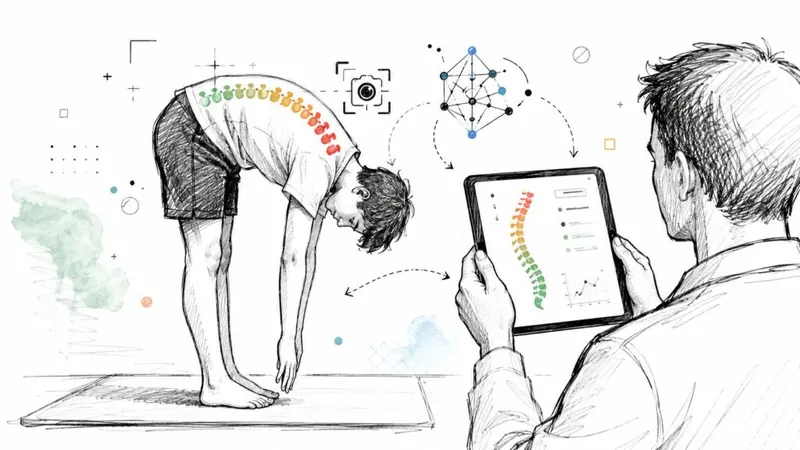
In certain situations, particularly when surgery is on the table, doctors will order bending or flexibility X-rays. It’s a bit like testing how much a young tree branch can bend without breaking. During this scan, you'll be asked to bend as far as you can to the left and then to the right while images are taken.
These X-rays show just how rigid or flexible the curve really is. A very flexible curve will straighten out quite a bit when you bend, whereas a rigid, structural curve won't change much. This information is vital for surgeons planning a spinal fusion, as it helps them decide exactly which vertebrae need to be included to achieve the best possible correction. You can learn more about the different curve patterns doctors look for by exploring the various types of scoliosis.
Advanced Imaging for a Complete Picture
While standard X-rays are the workhorse of scoliosis imaging, newer technology gives us an even more complete view with less radiation. One of the best examples is a full-spine imaging system, which captures a complete, head-to-toe picture of your skeleton in a single, fluid scan.
These systems are invaluable because they show how the spinal curve impacts the alignment of your hips, legs, and overall posture – all at once. More importantly, they often do this with a significantly lower radiation dose than a series of traditional X-rays. This is a huge step forward in applying the ALARA (As Low As Reasonably Achievable) principle to patient safety.
By combining the detailed information from these images with the Cobb angle, bending views, and other postural assessments, your doctor gets a complete diagnostic toolkit. This data-driven approach is fundamental to modern scoliosis care, ensuring that treatment isn't just about straightening a curve, but about restoring balance to the entire body.
The Real Risks of Cumulative Radiation Exposure
It's natural for families to worry about radiation, so let's have an honest conversation about it. While X-rays are essential for managing scoliosis, understanding the risks is about being informed, not afraid. The main concern isn't a single X-ray, which delivers a very small dose of radiation. The real issue is the cumulative effect – the total dose that adds up from many scans over several years.
Think of it like this: one spinal X-ray gives about the same radiation dose as the natural background radiation you'd get on a cross-country flight. That’s a tiny amount. But a child diagnosed with scoliosis might need a new scan every six to twelve months, potentially for a decade or more. Those small doses can accumulate over time.
Why Adolescents Are More Sensitive
This long-term monitoring is a particular concern for adolescents. Why? Because their bodies are in a state of rapid growth, their cells are dividing quickly. This makes developing tissues, especially in the chest and reproductive organs, more vulnerable to the potential long-term effects of radiation. It's the reason why managing exposure is a top priority throughout the teenage years.
This isn't just a theoretical worry. We have long-term studies from decades ago, when imaging used much higher radiation doses. That historical data drives home the importance of keeping exposure to an absolute minimum and has led the medical community to adopt strict safety principles to protect young patients.
The timeline below gives you a sense of how X-rays are used at different stages, from the initial diagnosis to planning for a potential surgery.
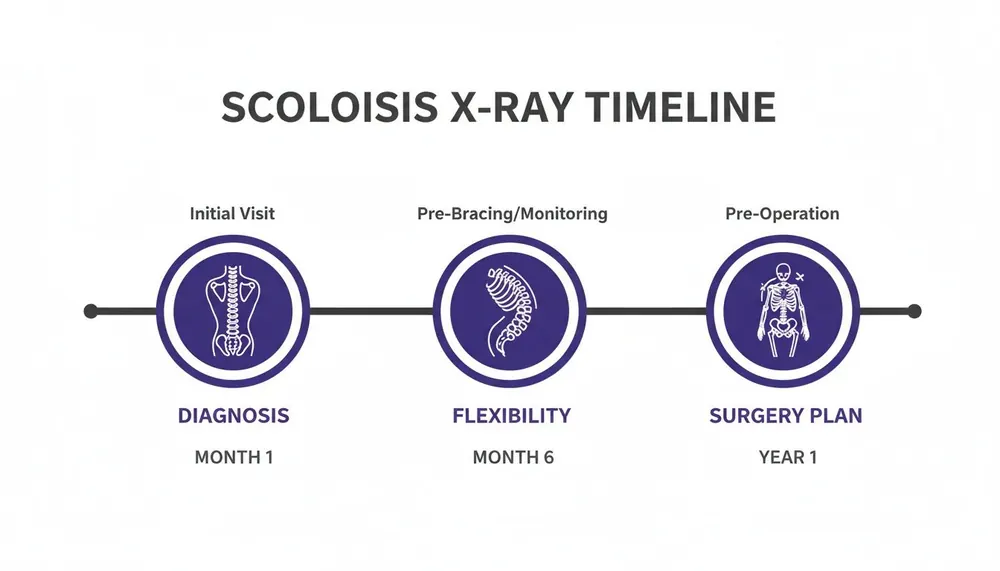
As you can see, different types of images are needed at specific points, each one contributing to the patient's overall radiation exposure over their treatment journey.
Here's a look at how a typical imaging schedule can add up over time for an adolescent with moderate scoliosis. This is just an example, but it illustrates how quickly the numbers can grow.
Typical Scoliosis Imaging Schedule and Cumulative Exposure
| Patient Age | Stage of Treatment | Typical X-Rays Per Year | Estimated Cumulative X-Rays |
|---|---|---|---|
| 12 | Initial Diagnosis & Flexibility Assessment | 2–4 | 2–4 |
| 13 | Brace Monitoring | 2 | 4–6 |
| 14 | Brace Monitoring (Peak Growth) | 2 | 6–8 |
| 15 | Brace Weaning & Monitoring | 2 | 8–10 |
| 16 | Post-Bracing Follow-Up | 1 | 9–11 |
| 17 | Reaching Skeletal Maturity | 1 | 10–12 |
| 18+ | Long-Term Follow-Up (e.g., every 5 years) | 0.2 | 12+ |
This table shows a conservative estimate. In cases where a curve is progressing quickly or surgery is being considered, the number of X-rays could be higher, potentially reaching 20 to 25 scans or more by early adulthood. This is why a proactive safety mindset is so crucial.
The ALARA Principle: A Guiding Philosophy
So, how do we balance the need for clear images with the need for safety? Clinicians operate under a simple but powerful philosophy known as ALARA, which stands for "As Low As Reasonably Achievable."
The ALARA principle is a promise: to use the absolute minimum amount of radiation needed to get a clear, useful image. It ensures the benefit of every X-ray, providing critical information for treatment, and always outweighs the potential risk.
In practice, this philosophy comes to life through a few key strategies:
Low-Dose Technology: Modern digital radiography and full-spine imaging systems are designed to capture excellent images with just a fraction of the radiation used by older machines.
Shielding Sensitive Areas: Lead aprons are always used to protect reproductive organs and other sensitive tissues that aren't being imaged.
Optimising Image Views: Whenever possible, we take images from back-to-front (a PA view), which significantly reduces radiation exposure to the breast tissue and chest.
Justifying Every Scan: A doctor will always weigh the need for a new X-ray against the patient's age, growth status, and how the curve has been behaving. If an X-ray won't change the treatment plan, it's often better to wait.
Understanding both the risks and the safety measures in place can help you feel more confident as a partner in your or your child's care. It also shines a light on the exciting developments in radiation-free monitoring. Today, innovative tools are emerging, including sophisticated AI posture analysis platforms like PosturaZen, which can track spinal changes using only a smartphone camera. These new technologies are helping to fill the monitoring gap between clinic visits, reducing the overall reliance on frequent X-rays for scoliosis and putting patient safety first.
How We Keep Scoliosis X-Rays Safe
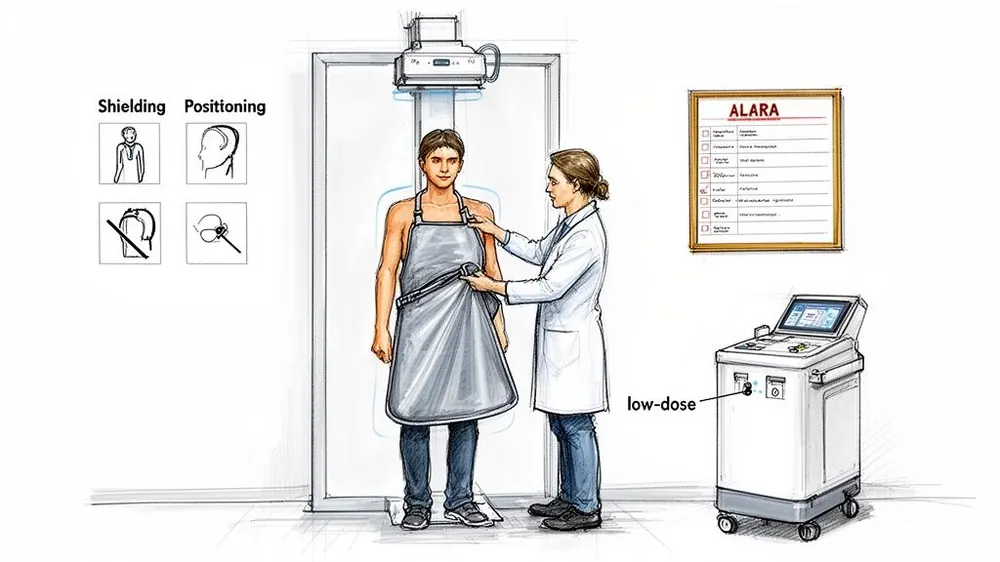
It’s completely natural for parents and patients to worry about radiation exposure, especially when monitoring a condition over many years. The medical community takes this concern very seriously, and modern scoliosis care is designed with safety as a top priority.
We follow a simple but powerful guiding principle: ALARA, which stands for "As Low As Reasonably Achievable." This isn't just a catchy acronym; it's a practical philosophy that shapes every decision we make about using X-rays for scoliosis. It’s about being deliberate and smart, ensuring the information we gain from each image far outweighs any potential risk.
Putting Safety First on Scan Day
Applying the ALARA principle involves a few key techniques that have become standard practice in any good orthopaedic clinic. You’ll see these in action during every visit.
Lead Shielding: This is the most obvious safety step. We use lead aprons and shields to cover sensitive areas like the thyroid and reproductive organs, protecting them from any unnecessary exposure.
Back-to-Front Imaging (PA View): Whenever we can, we take X-rays from the back to the front – a posteroanterior (PA) view. This small change in positioning makes a big difference, significantly lowering the radiation dose to more sensitive tissues in the chest and breast area, which is especially important for growing adolescents.
Low-Dose Technology: Today's digital X-ray machines are a world away from the old film systems. They’re incredibly efficient, capturing crystal-clear, full-spine images with just a fraction of the radiation used in the past. This has been a massive leap forward for patient safety.
Creating Smart Imaging Schedules
Just as important as the technology is the timing. A responsible specialist will never order an X-ray on a routine, "just because" schedule. Instead, every scan is carefully considered and tailored to the individual.
We perform an X-ray only when the results will directly influence the treatment plan. This decision is based on:
The patient’s age: A younger child with years of growth ahead will likely need more frequent checks.
The curve’s severity: Larger, more aggressive curves demand closer monitoring.
Growth potential: We pay close attention during growth spurts, as this is when a curve is most likely to progress.
The bottom line is, every scan must be justified. If an X-ray isn't going to change our immediate plan, like deciding whether or not to start bracing, then it's often better to wait and monitor the patient clinically.
Why a High-Quality First-Time Image Is So Important
One of the most effective ways to reduce radiation is simply to get the X-ray right the first time. A blurry or poorly positioned image from a general imaging centre often leads to a frustrating outcome: the need for a repeat scan. This doubles the radiation dose for no good reason.
The numbers are quite telling. A review of 170 adolescent cases at a major pediatric hospital revealed that images taken at non-specialised, community facilities had significant quality issues 83% of the time. This isn't just about extra radiation; it adds unnecessary costs and burdens to the healthcare system. Getting it done correctly from the start at a dedicated spine centre is one of the single best ways to minimise lifetime radiation exposure. You can learn more about how imaging standards have evolved by exploring the SRS Historical Timeline.
By weaving these strategies together: smart scheduling, modern technology, and precise techniques, we can gather the essential data we need while always prioritising a patient's long-term health. This approach is now being enhanced by new tools that help us monitor the spine without any radiation at all, reducing the need for in-office scans. A great example is AI scoliosis detection, which allows for radiation-free progress tracking between appointments using tools like PosturaZen.
The Future of Scoliosis Monitoring Is Radiation-Free
For decades, the only way to truly see what was happening with a spinal curve was to get an X-ray. But what if you could track scoliosis progression without the repeated radiation exposure? While X-rays are still the gold standard for diagnosis and major check-ins, the way we monitor scoliosis between those appointments is finally changing, putting more control directly into patients' hands.
The technology behind this shift is called surface topography. Think of it like a highly detailed 3D map of your back. Instead of radiation, it simply uses light and a camera to capture the exact contours of your torso. This information is then used to build a digital model of your back, revealing subtle asymmetries and rotations that the naked eye would miss.
The Rise of AI in Scoliosis Care
On its own, a 3D map is just a picture. But when you pair surface topography with artificial intelligence, it becomes a powerful clinical tool. Modern AI algorithms can analyse these 3D surface models with stunning accuracy, translating a quick, simple scan into real, usable data.
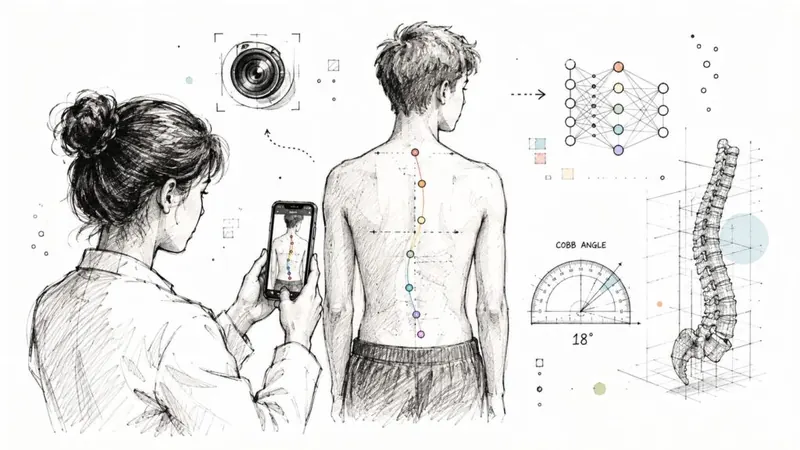
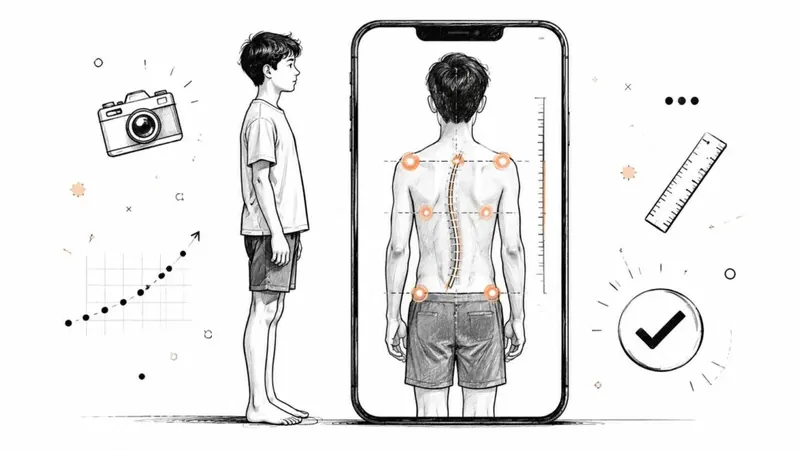
This is where new tools are making a real difference. A platform like PosturaZen, for example, brings this level of analysis to your smartphone. It uses sophisticated AI scoliosis detection to deliver clear insights right from home. All it takes is your phone's camera to perform a detailed postural analysis that, until recently, required expensive, specialised equipment in a clinic.
This process turns a simple body scan into a detailed 3D model of the torso, ready for a deep-dive analysis.
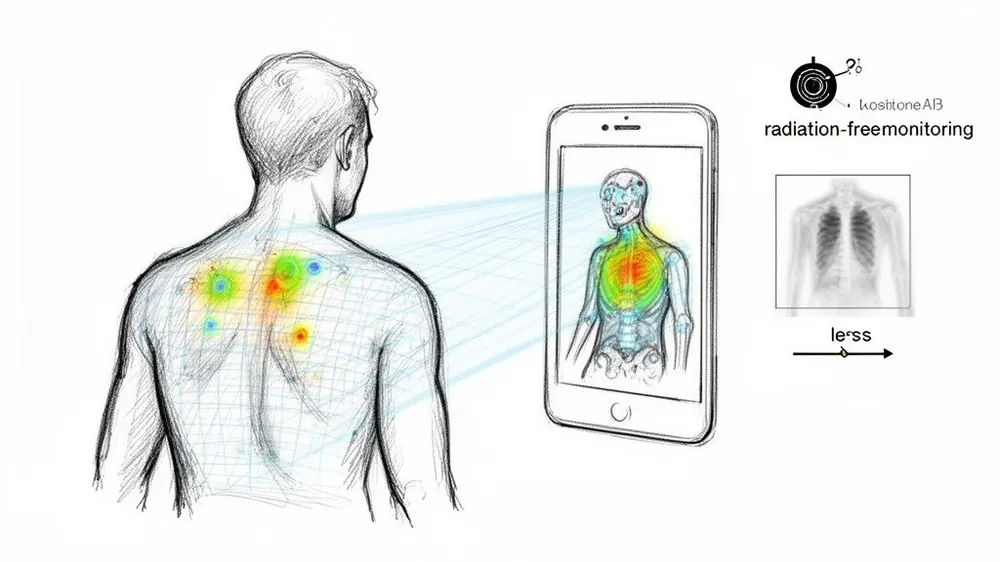
From there, the system objectively measures postural asymmetries, which are almost always connected to changes in the underlying spinal curve.
It's important to be clear: this technology doesn't replace X-rays for scoliosis. Instead, it serves as a smart monitoring tool between clinic visits. It fills that crucial gap, giving you and your doctor a continuous stream of data to understand how the spine is behaving over time, not just on the day of an appointment.
Key Features of AI-Powered Monitoring
Platforms like PosturaZen give you a comprehensive look at your spinal health without any radiation. Here’s what they can do:
Cobb Angle Estimation: Using advanced algorithms, the AI can estimate the Cobb angle from the surface data alone, giving you a reliable indicator of curve severity.
3D Visualisations: The app generates a dynamic 3D model of your spine, making it much easier to actually see and understand the curve's pattern and rotation.
Postural Asymmetry Tracking: It precisely measures key metrics like shoulder height differences, hip imbalances, and scapular prominence – all critical signs of scoliosis progression.
The need for these tools is clear when you look at the numbers. Patients with scoliosis can expect to have around 25 X-rays over their lifetime. While earlier attempts at non-radiation alternatives (like the unreliable Scolitron in 1986) fell short, today's AI offers a far more accurate and dependable solution.
By tracking postural changes at home, you’re essentially collecting valuable evidence for your doctor. This data helps them make a much more informed decision about when an X-ray is truly necessary, potentially reducing lifetime scans and minimising cumulative radiation exposure.
This new approach puts you in the driver's seat. Instead of anxiously waiting six or twelve months for the next X-ray, you can actively participate in your own care. Seeing measurable changes in your posture report can also be a huge motivator, especially if you're working hard on an exercise or bracing program. To learn more about the specifics, check out our guide on AI-powered scoliosis detection using a smartphone. This move toward patient empowerment and reduced radiation isn't just a trend; it's the future of collaborative scoliosis management.
Putting It All Together: Your Modern Scoliosis Action Plan
Getting a scoliosis diagnosis can feel like you’ve been handed a complex puzzle with no instructions. It's completely normal to feel overwhelmed. But the good news is that a modern, well-thought-out plan turns confusion into clarity. While X-rays for scoliosis are still the gold standard for diagnosis, the goal today isn’t just to take pictures; it’s to use them wisely.
This is all about creating a partnership between you and your specialist. The idea is to combine smart clinical check-ups with new at-home tools, leading to less anxiety, lower radiation exposure, and a real sense of control over the journey ahead.
How Patients and Parents Can Take the Lead
As a patient or the parent of a child with scoliosis, you're not just a passenger on this journey; you're the co-pilot. Feeling empowered starts with being informed, which helps you ask the right questions and advocate for the safest, most effective care possible.
Before you walk into your next appointment, take a few minutes to jot down some questions. This simple step can completely change the dynamic, turning a one-way conversation into a genuine collaboration.
Your voice matters. Asking about X-ray schedules and safety measures isn't questioning your doctor's expertise; it's being an active, engaged partner in your health. A great specialist will always welcome your involvement.
Here’s a quick checklist of questions you can bring to your next visit:
What is the recommended schedule for X-rays over the next year?
How does this plan align with the ALARA (As Low As Reasonably Achievable) principle to minimise radiation?
Will we be using the PA (posterior-anterior) view and lead shielding for every scan?
Could a radiation-free monitoring tool help us keep an eye on things between X-rays?
A Collaborative Plan for Clinicians and Patients
For clinicians, bringing modern tools into the practice can be a game-changer. Platforms that offer AI scoliosis detection create a powerful bridge between the clinic and a patient's daily life, offering a radiation-free way to monitor posture and curves. This is especially useful for tracking subtle changes between scheduled X-rays.
Think of it this way: if a home scan shows everything is stable, it provides reassurance to stick with the current plan. But if it flags a potential change, it gives you a clear, data-backed reason to bring the patient in for a closer look sooner rather than later.
This approach does more than just reduce radiation; it gets patients more involved. When they can see their own postural data and track their progress, they become more committed to their home exercises and treatment. This blend of clinical expertise and at-home monitoring creates a dynamic, hybrid model of care that gives a far more complete picture of the patient's condition.
For many, bracing is also a critical piece of the puzzle. You can learn more about its role in our guide to a back brace for scoliosis. By thoughtfully combining clinic visits, at-home monitoring, and the right supportive therapies, you build a comprehensive strategy that creates genuine optimism for managing scoliosis successfully for years to come.
Of course. Here is the rewritten section, crafted to sound natural, authoritative, and human-written, while adhering to all your requirements.
Your Questions About Scoliosis X-rays, Answered
It’s completely normal to have questions when you’re told that X-rays are part of a scoliosis management plan. Let’s walk through some of the most common concerns we hear from patients and their families.
How Often Will My Child Need an X-ray?
This is probably the most frequent question we get, and the answer is: it depends. The schedule is tailored entirely to your child’s unique situation: their age, how significant their curve is, and critically, how much growing they still have left to do.
For a growing teen with a moderate curve, we might need to check in with a new scan every 6 to 12 months to make sure things aren't progressing quickly. On the other hand, for someone with a very small, stable curve, or an adult who has finished growing, we might only do an X-ray every few years. Your specialist will always work on the ALARA (As Low As Reasonably Achievable) principle, ensuring every scan is justified and radiation exposure is kept to an absolute minimum.
Can We Use an MRI Instead of a Scoliosis X-ray?
That’s a great question, as many people know MRIs don't use radiation. The key is that X-rays and MRIs show us different things. Think of an X-ray as the blueprint of a building; it gives us a perfect, clear picture of the bony structure. This is exactly what we need to measure the Cobb angle while you’re standing up, which is the standard for diagnosis.
An MRI is more like checking the building’s wiring and plumbing. It gives us a beautiful, detailed look at the soft tissues, like the spinal cord and nerves. We typically only order an MRI if a curve has an unusual shape or if there are neurological symptoms we need to investigate. It helps us rule out other issues, but it can’t replace the X-ray for that initial bone measurement.
The initial diagnostic X-ray remains the gold standard for confirming scoliosis and establishing a baseline Cobb angle. However, radiation-free tools play a powerful role in ongoing monitoring.
Do Radiation-Free Tools Replace All X-rays?
Not completely, but they are a game-changer for reducing the number of X-rays needed over time. You still need that one foundational X-ray at the beginning to get a confirmed diagnosis and an accurate baseline measurement.
After that, modern radiation-free monitoring tools, especially those that use surface topography and AI scoliosis detection, become incredibly helpful. They allow you to accurately track changes in your posture, shoulder alignment, and overall spinal symmetry right from home. This ongoing data helps your clinical team see if things are stable or, more importantly, flags any significant changes that might signal it's time for a follow-up X-ray. It’s all about making sure scans are only performed when they are truly necessary.
Ready to take a more active role in managing scoliosis with less radiation? PosturaZen offers a radiation-free, AI-powered platform to monitor spinal health from home. Learn more about how you can track progress and feel empowered between clinic visits by visiting Posturazen.com/.